Decorative grow lights: appearance, mounting and coverage
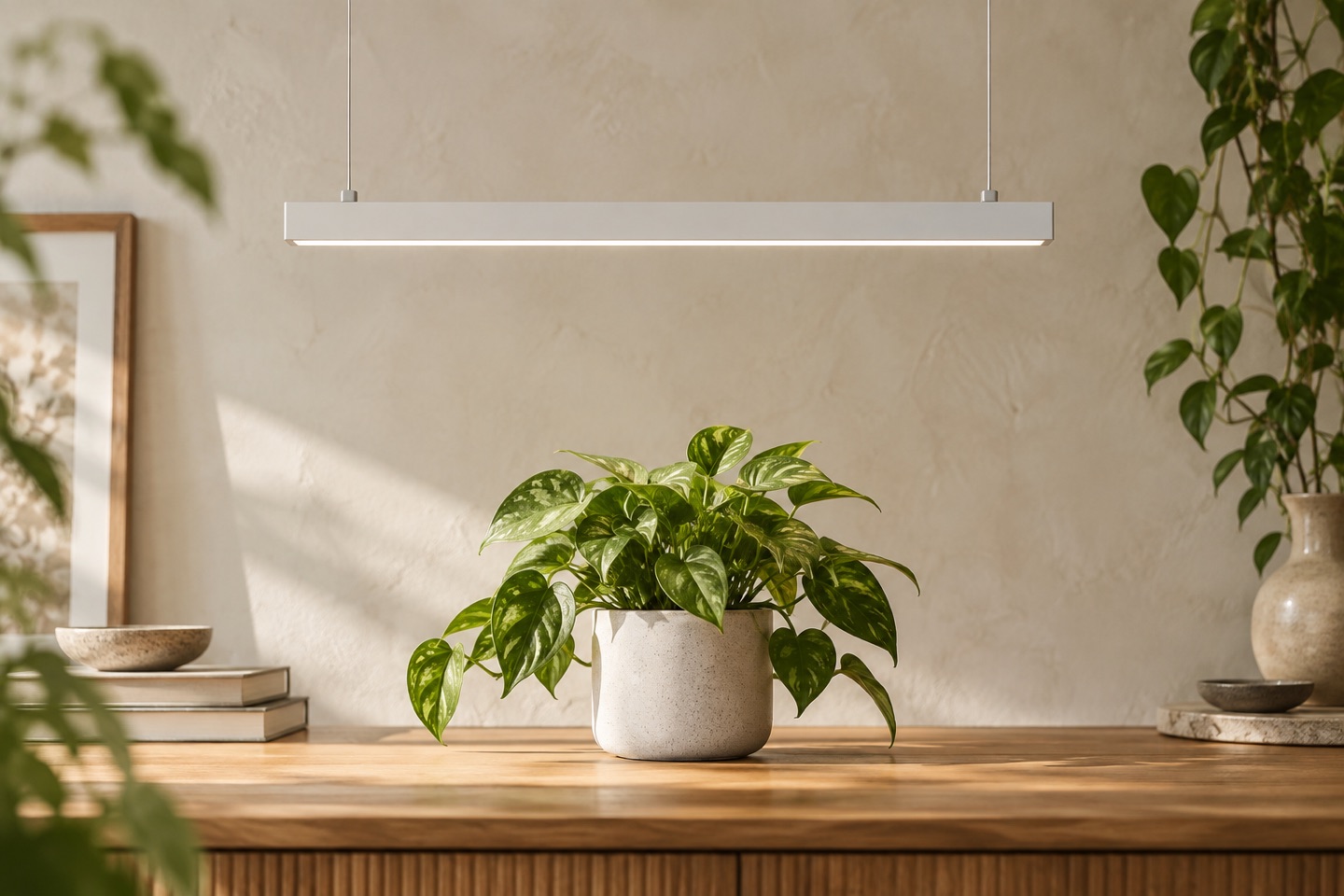
A decorative grow light has two jobs: it needs to suit the plant arrangement and look comfortable in the room. A fixture that is attractive when switched off can still be awkward if its cord crosses the display or its bright face points toward the sofa. The design decision includes where the light will operate every day.
We recommend comparing a complete pendant with a compatible grow-bulb arrangement. The pendant reduces some fixture-selection decisions; the bulb route gives you more choice of lamp style. This guide helps you choose between those approaches while keeping output, mounting, visual comfort, and ownership costs in the same comparison.
As an Amazon Associate I earn from qualifying purchases. Amazon links below are paid links. Read our disclosure.
This guide combines source-based research with practical arrangement advice. We have not conducted hands-on product tests.
Choose the room position first
Picture the light from the places where you use the room. Sit in the reading chair, stand at the doorway, and look from the sofa. A fixture can frame the plant attractively from one view and be uncomfortable from another. Decide which sightlines matter most before choosing the mounting point.
Include the cord in the design rather than treating it as something to hide later. A pendant needs a suitable route from its hanging point to the outlet; a floor or table lamp needs a place for its base. Check whether the installation interferes with drawers, curtains, or moving the pot. A decorative purchase should make the arrangement feel intentional during normal use, not just in the product photograph.
Draw the plant, seating area, walking route and possible mounting points. Note where the cable would run and whether the fixture can be placed above useful foliage without obstructing normal room use.
A pendant, floor lamp and bulb in an existing fixture solve different placement problems. Compare the arrangement you can actually install, rather than the look of a product photograph.
Keep generations and specifications together
Keep appearance and plant-light measurements separate. A warm or cool visual color can affect how the room feels, but it does not establish the quantity arriving at the foliage. Compare the exact fixture's documented output at a usable distance alongside its visual style.
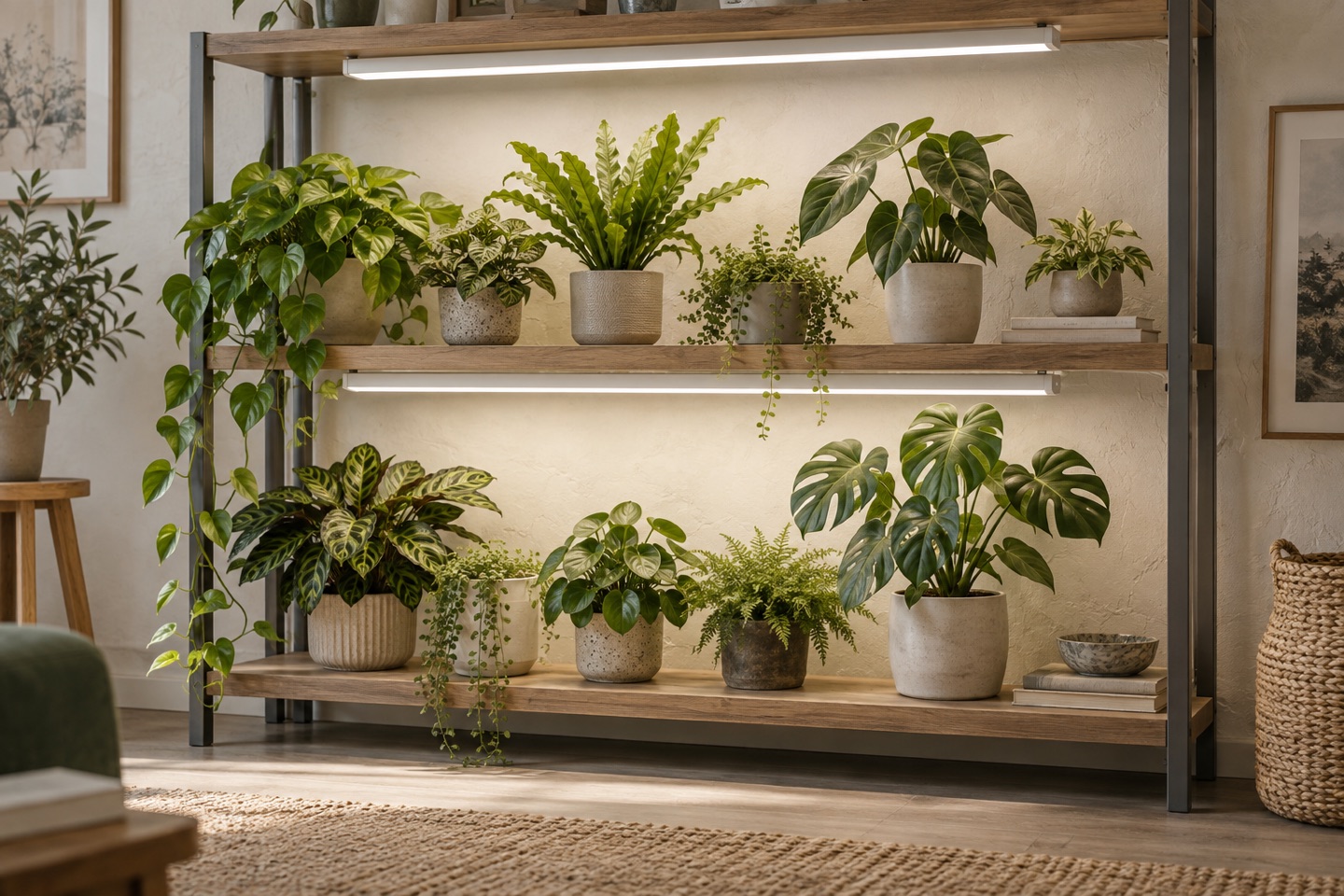
For an isolated plant, a focused arrangement may be practical. For several pots spread across a room, one attractive pendant may not serve every location. Decide which plants the fixture is meant to light and evaluate that growing area. It is better to give one decorative lamp a clear job than to expect it to replace several distinct installations simply because it looks prominent in the room.
Manufacturers may change power, dimensions or output between generations. A comparison should pair the exact current model name with its own documents. Legacy measurements should not be assigned to a new version with a similar name.
Request a map or output documentation describing distance and coverage. Colour appearance and a spectrum chart do not show how many photons reach the outer leaves.
Read the limits of a desk comparison
Write down which parts belong to the complete purchase. A bulb route needs a compatible lamp, an appropriate position, and possibly a timer. A pendant needs a suitable hanging point and cable management. Compare those totals instead of comparing the bulb price alone with the price of a whole fixture.
Check what can be adjusted and replaced. A replaceable bulb gives you one ownership path; an integrated LED gives you another. Neither is automatically better for every buyer. The practical question is what you value: choice of fixture, a ready-made design, easy control, or a particular mounting arrangement. Confirm the current model and supplied accessories rather than relying on photographs or reviews of an older generation.
We can compare published dimensions, mounting requirements and actual input power. We cannot verify glare comfort, finish quality, mounting strength or long-term reliability from specifications alone.
Use the running-cost tool for a proposed schedule and the shelf-fit worksheet when relevant. Neither tool certifies a mount or predicts plant growth. If a fixture needs a ceiling attachment, follow its manufacturer requirements rather than adapting an unverified decorative hook.
Choose a fixture that suits this job
Soltech Aspect Gen 2
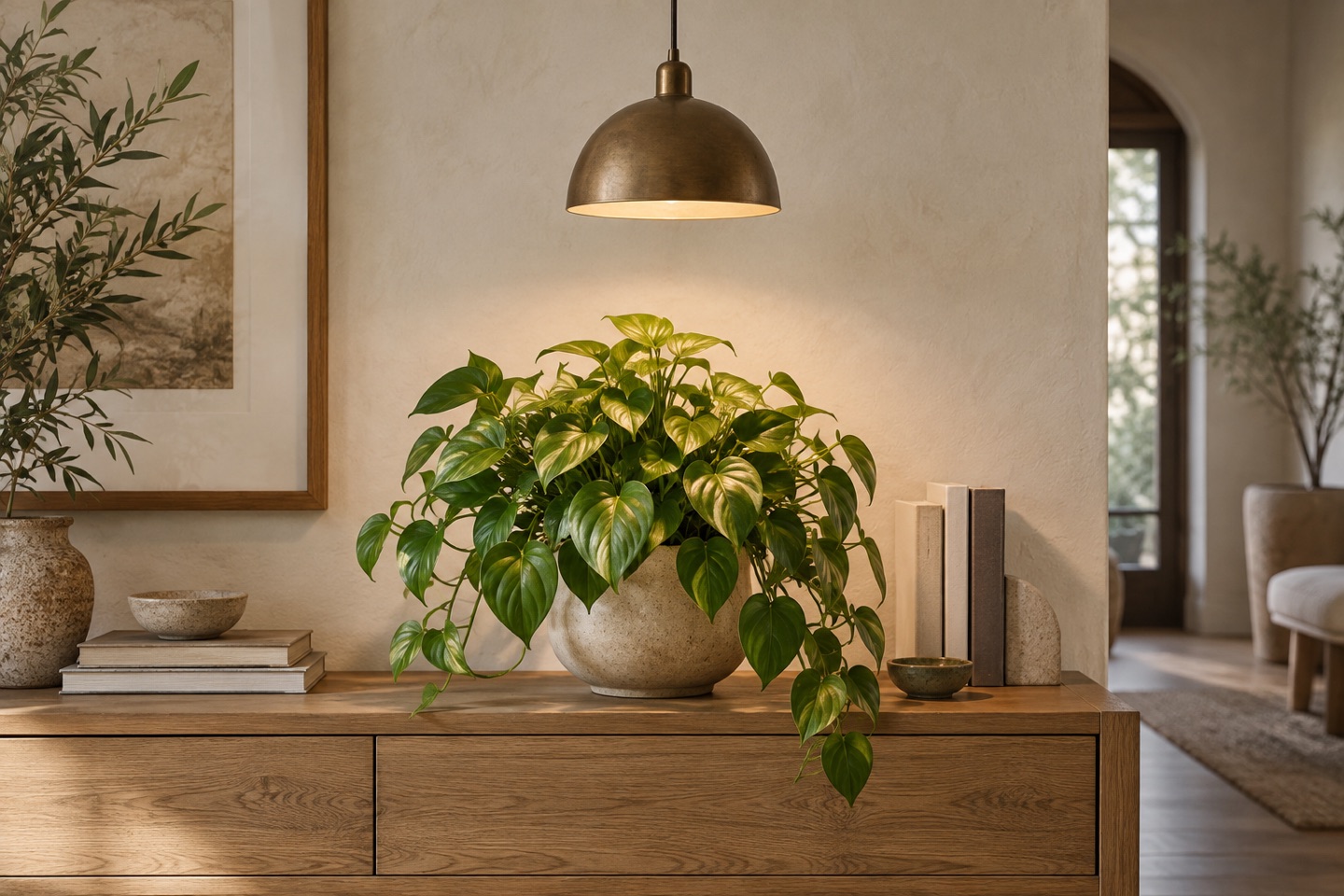
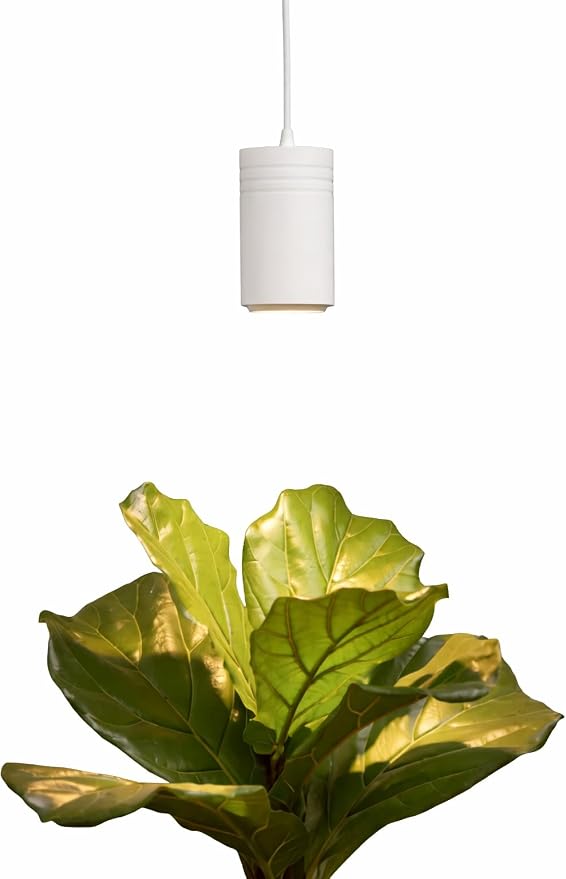
For a light that will remain visible in a living room, we recommend comparing the Soltech Aspect Gen 2 pendant. Its cylindrical housing and suspended placement make the lighting part of the display rather than an accessory clipped to the furniture. The current listing describes warm-white light and an on-cord dimmer, useful features when you want to adjust the room's appearance as well as the plant arrangement.
The purchase requires a suitable hanging point and a planned cord route. Think through installation before choosing a position above your favorite plant, especially in a rented room. The Amazon package currently says no timer is included, while Soltech’s direct US/Canada package lists an outlet timer. Check the exact seller’s package before buying a separate timer. We recommend the Aspect for someone who values an integrated decorative fixture; it makes less sense when you only need inexpensive lighting hidden beneath a shelf. Its integrated LED also differs from the separately replaceable bulb approach. Compare support terms and mounting instructions for the exact generation you select.
View Soltech Aspect Gen 2 on Amazon (paid link)
SANSI BR30 36W grow bulb
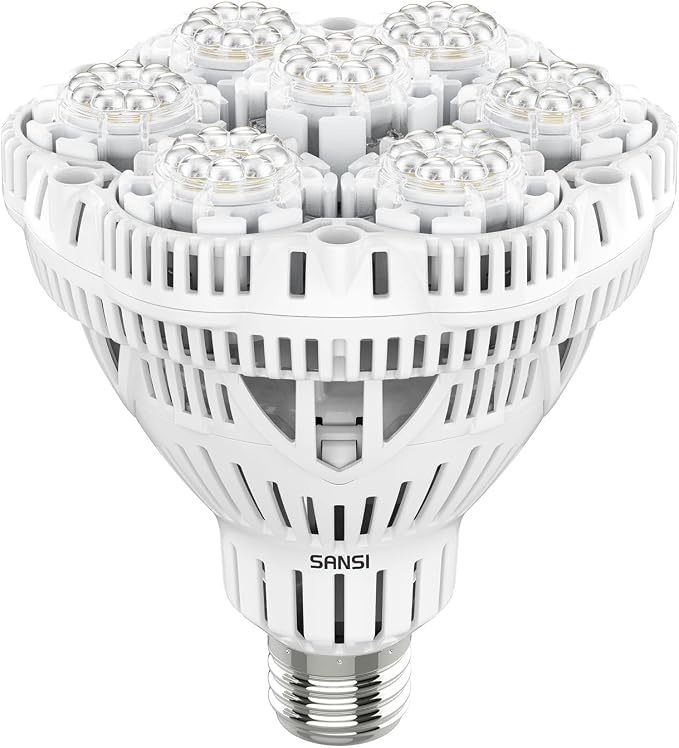
The SANSI BR30 36W bulb is our screw-in option to compare when you want to choose your own suitable fixture. Its appeal is flexibility: a separately purchased lamp can give you the reach, base position, and visual style that work in your room. The US version uses an E26 base, but matching that base is only the first compatibility check.
Compare bulb dimensions, fixture rating, approved orientation, ventilation, and the manufacturer's instructions before combining them. Do not place this 36W bulb in SANSI's 10W clip-on assembly. An open, compatible fixture may suit your plans better than trying to hide a large bulb inside an unsuitable shade. We recommend this route to buyers willing to check the complete combination; a ready-made plant lamp is simpler when you want fewer compatibility decisions. Use the exact BR30 documentation when evaluating output, because an older review of a similarly named SANSI bulb may describe another design.
View SANSI BR30 36W grow bulb on Amazon (paid link)
GE BR30 Seeds and Greens
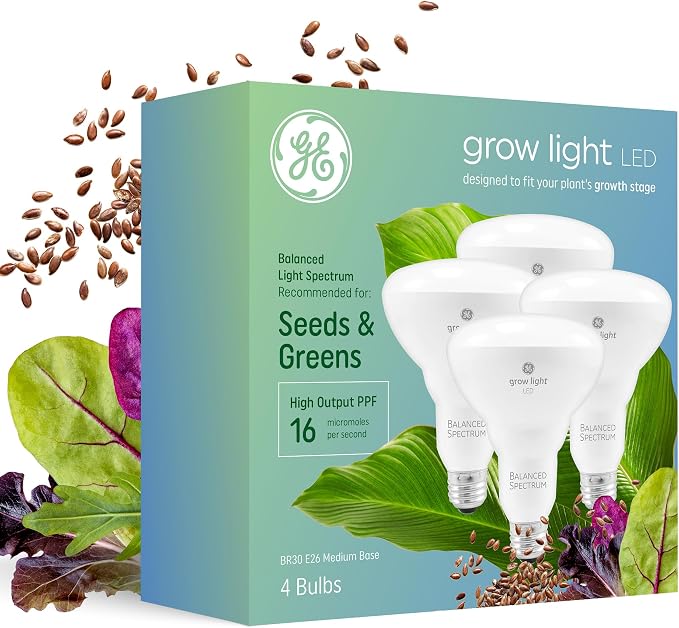
The GE BR30 Seeds and Greens bulb is an alternative to compare when you already have a compatible lamp and want a straightforward bulb change. GE's documentation identifies an E26-type medium base and a non-dimmable design. Our verified Amazon destination is a four-pack; check the package quantity before buying when you only need one bulb.
We recommend this approach to buyers who can use an existing suitable fixture, because reusing that lamp may keep the installation simple. Check its rating, physical space around the bulb, and the GE instructions before installing it. A matching screw base alone does not confirm that every lamp shade or enclosure is appropriate. The published PPF describes total photon output, not the light reaching each leaf at your chosen distance. This is a useful bulb option to evaluate, rather than a promise that one bulb serves an entire shelf. Choose a dedicated shelf fixture when the growing area calls for a longer arrangement.
View GE BR30 Seeds and Greens on Amazon (paid link)
Make the setup easy to use
Evaluate a complete arrangement
A good comparison includes the lamp, its mount, the space it occupies, and the routine you will use. Put your proposed fixture into a simple sketch showing the foliage, shelf edges, cord route, and access for watering. Include room to make adjustments. A fixture that technically fits can still be inconvenient when its switch is behind the plants or its cable crosses the area where you lift containers.
Compare two options using the same growing footprint and available mounting height. Keep the model, revision, and controls with any published measurements. If one map was made closer to the light or inside reflective walls, it is not a direct comparison with a map made farther away on an open shelf. Ask for missing conditions before treating a large headline number as useful evidence.
Separate light quantity from power use
PPFD describes light arriving at a surface, while watts describe electrical input. Both are useful, but they answer different questions. Record readings where the leaves sit and look at several positions across the display. A lamp can have a high center reading without distributing that light in the shape you need. Published PPF is overall output; it does not establish a particular leaf-level reading.
For a constant reading, DLI equals PPFD multiplied by daily hours and 0.0036. An illustrative 100 µmol/m²/s for twelve hours therefore gives 4.32 mol/m²/day. This is arithmetic, not a plant recommendation. Changing daylight requires measurements over time, so one noon window reading should not be multiplied by the entire day. Keep biological guidance separate from the calculation.
Include the ongoing expense
A hypothetical 30W light running twelve hours daily for thirty days uses 10.8 kWh. At an assumed $0.15 per kWh, that is $1.62 for the month. Use actual input power and your own tariff, then add mounts, compatible bulbs, and any timer to the upfront comparison. A cheaper lamp that needs additional fixtures may become a more expensive complete setup. Decide what meets the task before deciding which price looks best.
Choose for your room, not a showroom
For a permanent plant corner, the Aspect Gen 2 is the complete pendant to compare. Its housing, warm-white appearance, and on-cord dimmer make it a relevant decorative option. Check installation, cord routing, and whether you need a separate timer. The independent House Plant Journal review discloses a paid partnership, so keep that context when reading its observations.
For a room where you already have a suitable lamp, the GE bulb route may be simpler. Confirm compatibility and package quantity before ordering. It can preserve a fixture you like, but an unsuitable shade is not made suitable merely by accepting the screw base.
For a buyer who wants a separately chosen fixture and a different bulb option, compare the SANSI BR30 route. Budget for the complete combination and verify the ventilation and electrical requirements. Choose the approach you can install correctly and leave in place comfortably. A polished housing adds value when appearance is part of your goal; it does not replace the output evidence for the plant you intend to light.
Our recommendation
Choose a decorative light as a complete room installation. We recommend the Aspect Gen 2 when you value a purpose-built pendant, and a compatible bulb route when retaining or selecting your own fixture gives you a better arrangement.
Before buying, check the view from nearby seating, plan the cord route, identify the exact plant footprint, and compare the full purchase cost. Verify current accessories and support terms. If the attractive mounting position cannot deliver a documented arrangement for your plant, revise the position or choose another design. The best-looking setup is one you can comfortably keep operating.
When you are ready to compare listings, consider Soltech Aspect Gen 2 (paid link) for a visible decorative pendant; SANSI BR30 36W grow bulb (paid link) for a compatible lamp you choose separately; GE BR30 Seeds and Greens four-pack (paid link) for a compatible existing lamp, with pack quantity checked. Check the selected version and included components before ordering.
Research sources and scope
Plant guidance comes from the references below. Fixture links accompany the relevant recommendations. Arrangement examples and purchasing advice are our analysis. We report no hands-on product trials or independently measured growing footprints.
- Supplemental-light considerations — Iowa State Extension ↗Reviewed 2026-09-27
- Aspect Gen 2 review; paid partnership and affiliate disclosure ↗Reviewed 2026-09-27
- Independent SANSI brand review; exact BR30 performance not established ↗Reviewed 2026-09-27