Indoor citrus lighting, including lemon trees
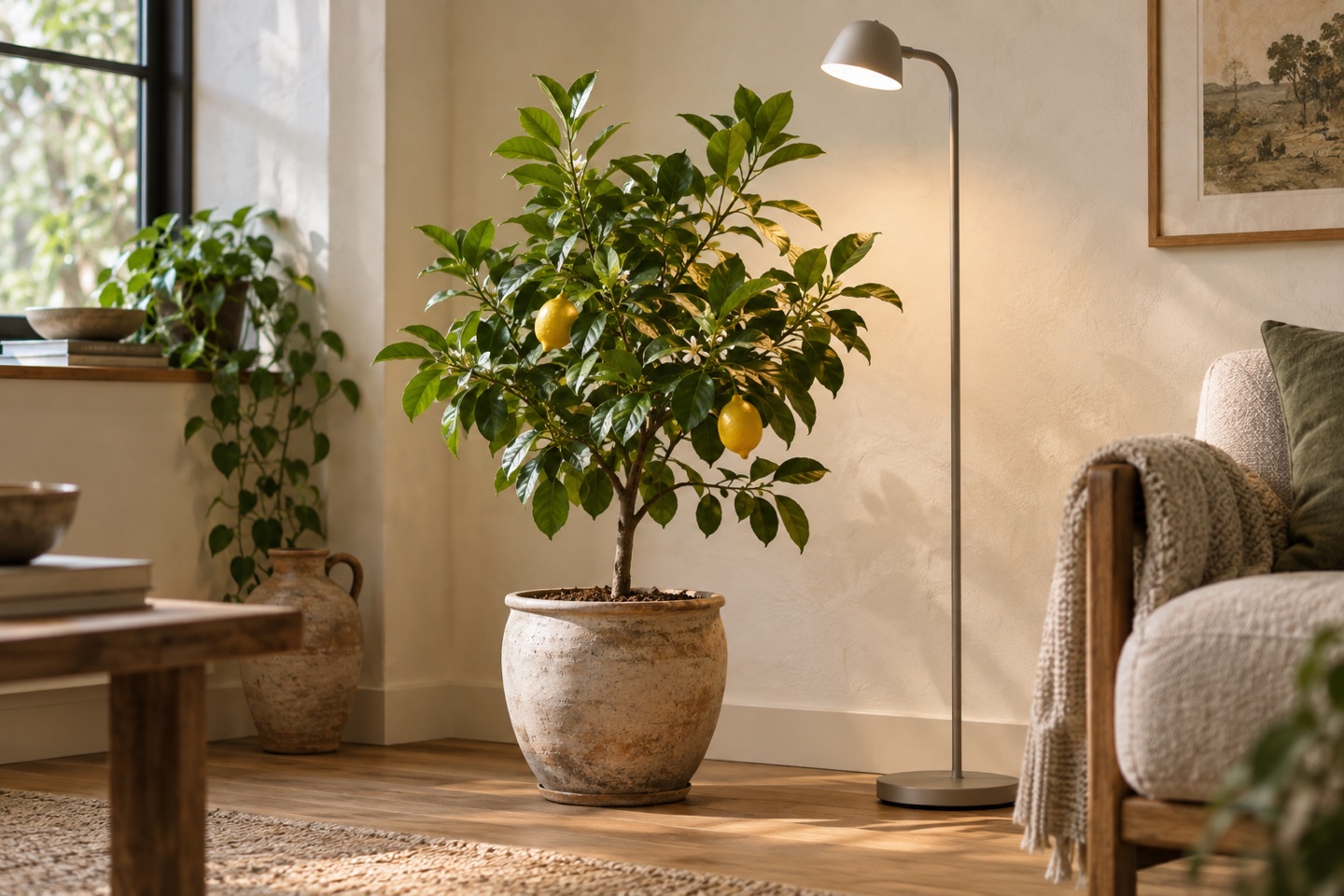
An indoor citrus tree can make a wonderful seasonal display, but its canopy creates a larger lighting task than the pot suggests. A little lamp aimed at the center may look reassuring while the outer branches occupy very different positions. Choosing the right arrangement begins with the tree, its window, and the goal you have for keeping it indoors.
We recommend using a suitable bright location first, then comparing fixtures around the actual canopy. A compatible bulb arrangement offers mounting flexibility; a longer fixture may suit a dedicated growing area. This guide explains the physical purchase decisions without promising that adding a lamp will produce a particular fruit harvest.
As an Amazon Associate I earn from qualifying purchases. Amazon links below are paid links. Read our disclosure.
This guide combines source-based research with practical arrangement advice. We have not conducted hands-on product tests.
Set a realistic objective
Write down the citrus variety and what you want from the indoor period. Keeping a potted tree as a houseplant is a different expectation from planning around a dependable crop. University of Minnesota Extension makes that distinction when discussing indoor fruit production. Keep it in mind before buying equipment on the strength of a fruiting photograph.
Record the daylight available in the proposed location, including whether the window is shaded and how the useful light changes through the day. A lamp may supplement that location or carry a larger share of the task. Those are different requirements. Choose the arrangement after deciding which situation applies, rather than assuming the same bulb suits every lemon tree in every room.
University of Minnesota Extension treats indoor citrus as possible but fruit production as more demanding than keeping the plant as a houseplant. Write down whether your goal is winter maintenance, growth or fruit before buying equipment.
Keep the tree’s identity, including whether it is a named dwarf cultivar. A seed-grown tree and a grafted container specimen need not behave the same way.
Map the canopy and window
Draw the canopy from above and from the side. Include the highest leaves, the widest branches, and the location of the pot relative to the proposed fixture. Leave room to reach around the tree for care and to move the container when necessary.
A tree beside a window may have a convenient light position above or to one side, but check the complete fixture instructions before choosing that orientation. A tree in a room corner may need a different support arrangement. Avoid improvising with hardware that was meant for a much smaller pot. If the tree is too tall for the available shelf or stand, resolve that physical limit before comparing output figures. The light cannot create missing clearance.
Measure branch width and upper leaf height. Draw where direct window light reaches the tree during the day and where the lamp would be mounted. Allow space to turn or move the container only where doing so is practical.
A narrow beam can leave side branches outside its footprint. Compare the fixture’s complete coverage map at the intended mounting height. Avoid judging the entire tree by a reading at the upper centre leaf.
Do not turn lighting into a fruit guarantee
Treat output documentation as part of the purchase rather than an optional technical detail. For a wider canopy, you want to understand what happens away from the center of the beam. Keep the distance, dimmer setting, and tested area with any readings you compare.
Leave seasonal flexibility in the arrangement. If the plant moves outside or to another location later, consider how the fixture will be stored or repurposed. An installation that is easy to adjust may be valuable for that reason even when a fixed mount looks cleaner initially. Keep the seasonal care guidance with the lighting plan. Moving between environments involves more than switching a lamp on or off, so evaluate the complete routine.
Light is one part of the indoor environment. Temperature, plant maturity and pollination can also affect results. Keep those uncertainties separate rather than attaching a fruit-yield claim to a particular bulb.
Compare actual input power for running-cost estimates, and verify the fixture/support combination for the available room. A stronger unit is not useful if the only possible mount leaves it in the wrong position.
Choose a fixture that suits this job
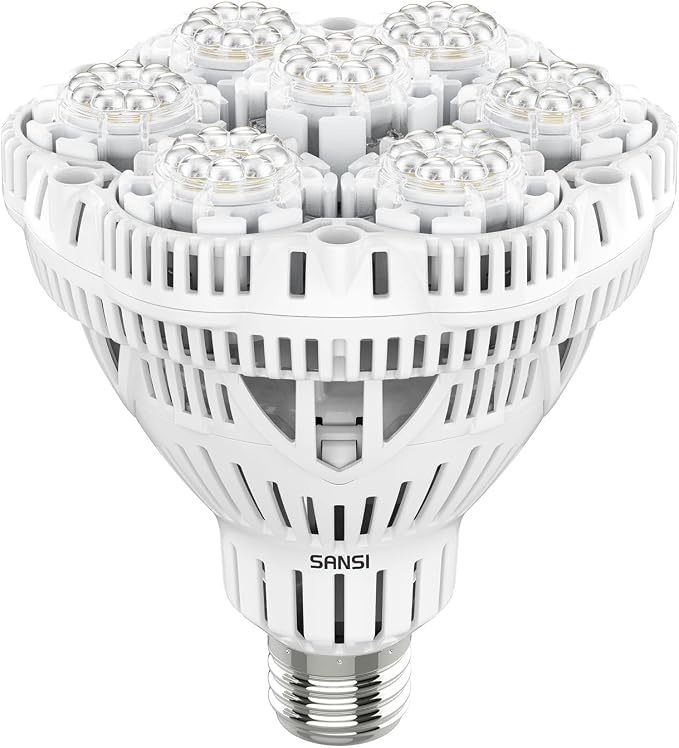
SANSI BR30 36W grow bulb
The SANSI BR30 36W bulb is our screw-in option to compare when you want to choose your own suitable fixture. Its appeal is flexibility: a separately purchased lamp can give you the reach, base position, and visual style that work in your room. The US version uses an E26 base, but matching that base is only the first compatibility check.
Compare bulb dimensions, fixture rating, approved orientation, ventilation, and the manufacturer's instructions before combining them. Do not place this 36W bulb in SANSI's 10W clip-on assembly. An open, compatible fixture may suit your plans better than trying to hide a large bulb inside an unsuitable shade. We recommend this route to buyers willing to check the complete combination; a ready-made plant lamp is simpler when you want fewer compatibility decisions. Use the exact BR30 documentation when evaluating output, because an older review of a similarly named SANSI bulb may describe another design.
View SANSI BR30 36W grow bulb on Amazon (paid link)
Spider Farmer SF600
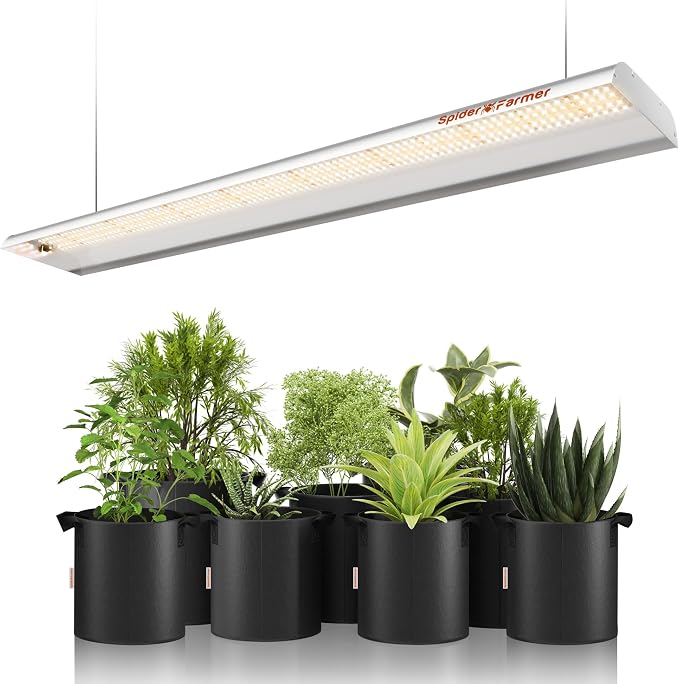
The Spider Farmer SF600 is the longer, integrated fixture to compare for a rectangular growing area. We recommend its form for buyers who would rather hang one long assembly than arrange several separate short bars. That can simplify the physical layout above trays, provided the fixture and hanging hardware fit inside the available space.
Allow room for the power supply, cable exits, and raising or lowering the fixture. Check the current package and its controls instead of assuming it includes a dimmer or timer. External reviews discuss earlier SF600 versions, and the currently observed listing gives different power wording from older documents. For that reason, confirm the current model's input draw before calculating cost, and use its current instructions for mounting. The benefit is the tidy rectangular arrangement; the limitation is that a long fixture is less adaptable to an isolated pot or a narrow furniture corner. A staged product photograph does not establish uniform light across its entire pictured display.
View Spider Farmer SF600 on Amazon (paid link)
Make the setup easy to use
Make the shelf work on ordinary days
Plan the daily jobs before fixing the light permanently. You need to inspect plants, lift containers, deal with drainage, and adjust the arrangement as growth changes its height. Route cords so those tasks do not require disconnecting the entire installation. Keep electrical components away from the normal watering route and follow the fixture's environment restrictions.
A timer reduces the number of things you must remember. Check that the chosen light restarts as expected after the timer restores power and that the planned light and dark periods suit the crop. Some controls retain their settings, while others need manual intervention; verify the exact model before depending on an unattended routine. Check the first full cycle after installation.
Keep comparisons meaningful
Label each tray or pot with its crop and starting date, then record fixture position and schedule. Compare plants at similar stages rather than comparing a newly started tray with one that has already grown taller. If you change the lamp setting, note that change separately from a change in watering, growing medium, or temperature. This gives you a useful record when planning the next batch.
For output measurements, use readings at the foliage or intended growing surface. Check several positions across the tray, including the corners, with the sensor facing the source consistently. Record the instrument, settings, distance, and any dimmer position. A center reading can look encouraging while leaving a different arrangement at the edges. Use the crop's guidance to interpret your readings rather than selecting a target simply because it appears in another person's product review.
Price the whole installation
Add the input watts of the lamps you will actually run. In a hypothetical 40W arrangement operated fourteen hours daily for thirty days, the lamps use 16.8 kWh. At an assumed $0.15 per kWh, that costs $2.52 for the month. A different tariff or schedule changes the result. Include additional equipment separately and compare the upfront cost as well as electricity. These example numbers illustrate the calculation; they are not a crop prescription or measurements of a named fixture.
Compare the tree, the room, and your expectations
For a smaller citrus plant in a suitable window area, a compatible separately positioned bulb fixture can be a useful supplemental route to investigate. Check the complete lamp combination and current output documentation rather than treating bulb wattage as a coverage guarantee.
For several plants in a dedicated indoor station, a longer fixture may simplify the layout. Plan the canopy heights and leave an adjustment route instead of setting the lamp by pot dimensions. A rectangular installation can be convenient, but it still needs evidence suited to the actual growing area.
For a tree purchased primarily as an attractive houseplant, keep the budget connected to that goal. A fixture may help you arrange a suitable location without guaranteeing fruit. For a buyer whose main goal is a harvest, identify the biological requirements and evidence for the proposed setup before spending heavily. Do not let an attractive product image substitute for those checks. The same lamp can be a reasonable supplemental purchase and an inadequately documented crop-production plan.
Our recommendation
Choose citrus lighting around the canopy and the useful daylight already available. We recommend a compatible bulb arrangement when mounting flexibility helps one tree, and a longer fixture when a dedicated area fits its documented distribution.
Before buying, identify the citrus variety, define whether your goal is a houseplant or a harvest, measure the canopy, and check the support and clearance. Keep expectations proportionate to the evidence. A well-planned light can be a useful part of the indoor arrangement; the purchase alone does not establish pollination, fruit yield, or year-round growing success.
When you are ready to compare listings, consider SANSI BR30 36W grow bulb (paid link) for a compatible lamp you choose separately; Spider Farmer SF600 (paid link) for a longer rectangular growing station. Check the selected version and included components before ordering.
Research sources and scope
Plant guidance comes from the references below. Fixture links accompany the relevant recommendations. Arrangement examples and purchasing advice are our analysis. We report no hands-on product trials or independently measured growing footprints.
- Growing citrus indoors — University of Minnesota Extension ↗Reviewed 2026-09-27
- Iowa State Extension: supplemental indoor light and measurement concepts ↗Reviewed 2026-09-27
- Independent SANSI brand review; exact BR30 performance not established ↗Reviewed 2026-09-27
- Independent SF300/SF600 measurements; earlier versions and stated test conditions ↗Reviewed 2026-09-27
- SF600 setup review; gifted unit and affiliate disclosure, numerical claims excluded ↗Reviewed 2026-09-27