Grow lights for Tradescantia: shelf and hanging setups
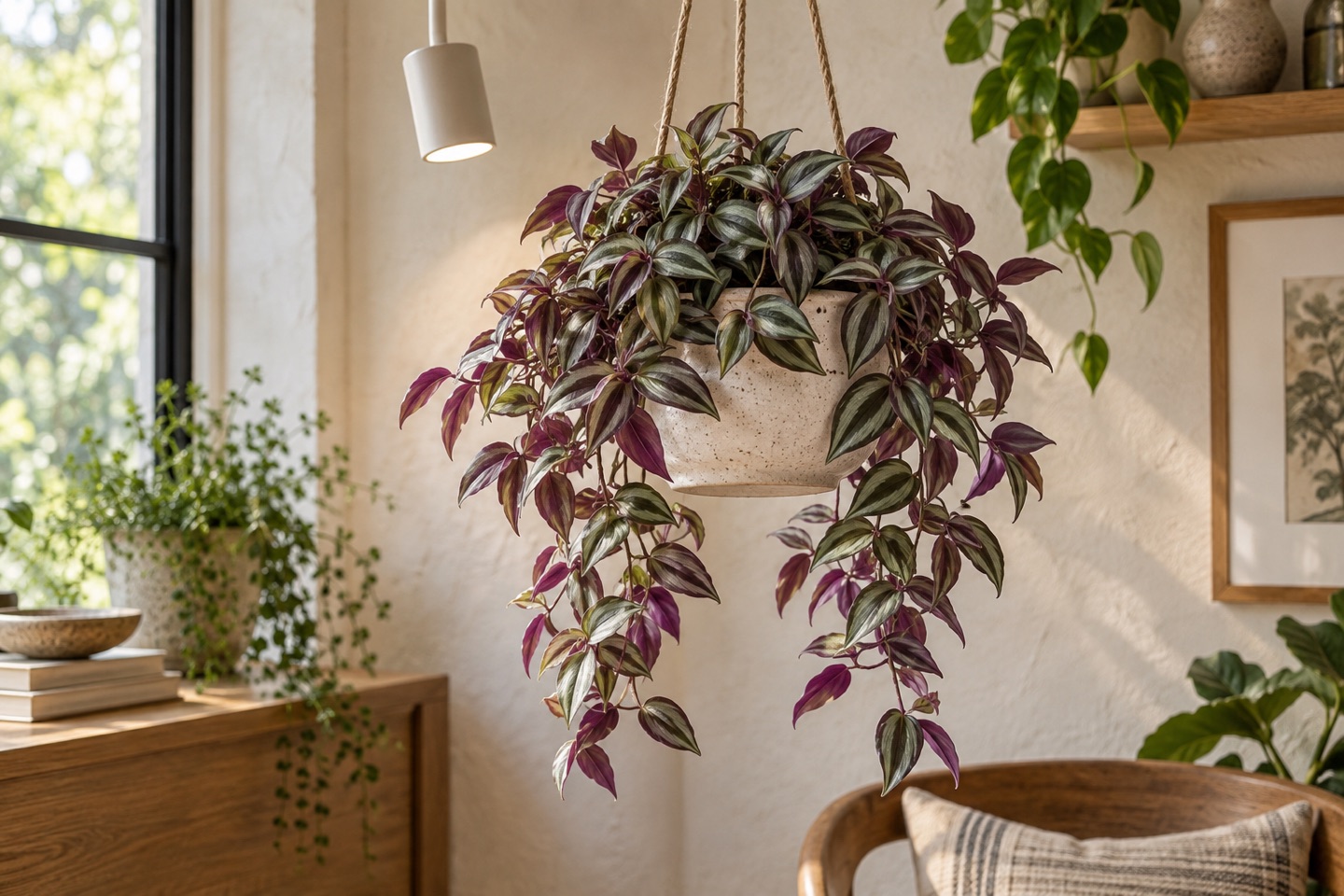
Tradescantia is an appealing plant for a shelf because its colorful stems can spill over the edge and soften a plain corner. That same trailing shape is what makes the lighting purchase worth planning. The plant you want to illuminate may be wider, longer, and lower than its pot suggests.
For one manageable display, an adjustable clamp lamp is a practical starting point. For several plants along a shelf, short bars give you more ways to arrange the light above the foliage. This guide explains how to choose between them, leave room for growth, and avoid building a tidy installation that becomes awkward a month later.
As an Amazon Associate I earn from qualifying purchases. Amazon links below are paid links. Read our disclosure.
This guide combines source-based research with practical arrangement advice. We have not conducted hands-on product tests.
Identify the Tradescantia
Start with the name on the plant label. Tradescantia zebrina is the striped, trailing example discussed by North Carolina Extension; other Tradescantia plants can differ. Its guidance connects inadequate light with reduced color and loss of lower leaves, while also discussing moisture and other growing conditions. That makes light worth considering without turning every bare stem into proof you need a new lamp.
Choose a goal you can describe plainly: brighten a plant on the bookcase, support a row of cuttings, or supplement a hanging display. Those arrangements need different physical shapes. If the current plant looks good beside a suitable window, an additional fixture may offer little benefit. If you want it in a darker display location, plan the lamp around that specific move.
Tradescantia is a genus, not one interchangeable plant. Use a species reference such as NC State Extension’s Tradescantia zebrina entry and keep the plant label with your records.
Our guide uses the current plant name in its title. A familiar common name on an old label does not establish the exact species or a numerical light requirement.
Follow the trailing shape
Draw the plant as a loose oval from above, then mark where the stems hang below the shelf. This is more useful than measuring the pot alone. A head centered above the container may leave the longest trails outside the arrangement you intended to light.
For a compact plant, the clamp's adjustable position makes it easier to give the display a dedicated light without adding a table-lamp base. For a spreading row, bars can follow the shelf instead. Keep the front edge clear enough to lift the pot without dragging its stems through cables. If you expect the display to trail substantially, allow a route to reposition the light rather than fixing it into the smallest possible gap.
Lay out the shelf plant or draw the hanging arrangement. Mark the outer tips and the leaves shaded by a shelf lip or by neighbouring pots. Measure the exposed foliage footprint rather than using only the container diameter.
Compare a movable lamp with a shelf bar at the mounting positions available. The better physical choice is the one that can reach the useful foliage within its approved installation conditions; this is not a claim about measured growth performance.
Leave room for the arrangement to change
Think of the first installation as a starting arrangement. A newly rooted cutting and an established trailing plant will occupy different spaces. Choose a mount you can reach, and photograph the initial arrangement so you can see what has changed when the stems extend.
A small amount of routine maintenance can preserve the display's shape; the plant reference discusses pruning and propagation. Treat those decisions as plant care rather than expecting a lamp to keep every stem compact indefinitely. Leave a nearby working spot for removing the pot, checking the plant, and managing cuttings. The best shelf arrangement feels easy to use on an ordinary watering day, not just when everything has been placed for a photograph.
As trails extend, the useful footprint can outgrow the original lamp position. Keep access to adjust the setup and record changes rather than assuming one initial measurement stays valid indefinitely.
Colour and stem shape alone are not exact measurements of light. If you compare PPFD readings, use the same leaf positions and measurement method. Do not infer a cultivar’s optimum from the strongest value on a fixture map.
Choose a fixture that suits this job
SANSI 10W adjustable clip-on
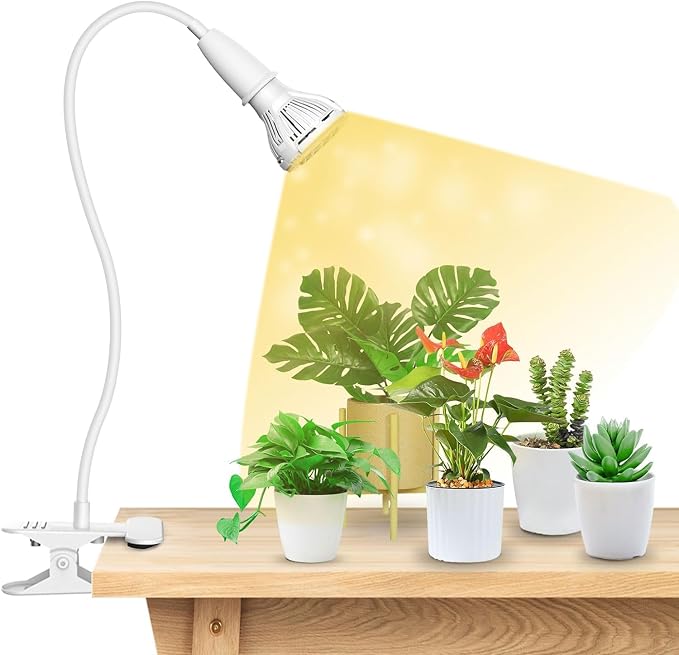
For one compact plant display, we recommend the SANSI one-head 10W clip-on as an adjustable option when the furniture provides a suitable mounting edge. The clamp leaves the surface available for the pot, while the arm lets you position the head independently of that attachment point. That is particularly useful beside a desk or a small plant stand where another lamp base would be inconvenient.
The bulb can be replaced separately, giving you a component to change rather than necessarily replacing the whole fixture. Check compatible replacements and the fixture rating before ordering a different bulb. Plan the arrangement around the plant's foliage and leave the required clearance: SANSI's precautions specify at least one foot and warn against touching the operating bulb. For a wide display, choose a wider lighting arrangement rather than expecting this small head to reach every plant. We have not established its exact growing footprint through independent measurements.
View SANSI 10W adjustable clip-on on Amazon (paid link)
Barrina T5 shelf-bar family
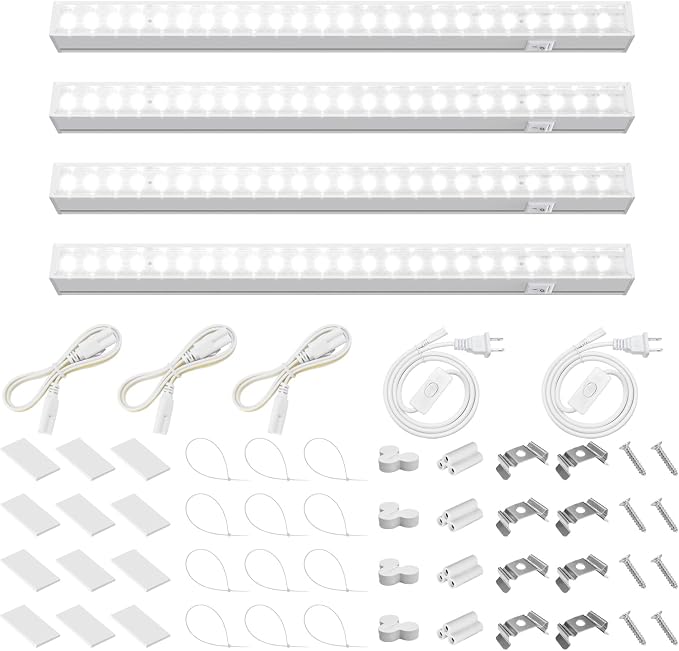
For a compact shelf, the Barrina T5 one-foot, white-cover four-pack is our modular option to compare. Separate bars let you plan their positions around a row of pots or a small tray, rather than placing one spotlight over the middle. The selected listing includes connecting cords and several mounting components, and describes a 20W total across the four bars. Use the exact pack when checking what you need.
This version is non-magnetic; other Barrina listings have different covers and attachment systems. Choose mounting hardware suited to your shelf and follow the surface restrictions in the instructions. For instance, tape has a different job on a smooth panel than on a wire rack. We favor these bars when flexibility in arranging a small shelf matters. The tradeoff is more individual pieces and cables to organize. Do not assume that four bars automatically cover a particular tray: check the intended mounting distance, distribution, and plant requirements before deciding how many to install.
View Barrina T5 shelf-bar family on Amazon (paid link)
Make the setup easy to use
Make the timer fit the room
A routine that runs without daily reminders is one of the best practical improvements you can make. Decide when you want the display illuminated and when you want the room dark, then check that the schedule fits the plant's care guidance. The lamp should help you enjoy the room rather than become something you repeatedly switch off because it interferes with reading, work, or sleep.
Confirm how the exact fixture behaves after the timer removes and restores power. An electronic control that needs another button press can frustrate an otherwise sensible plan. Keep the switch accessible after routing the cord. If reaching it means moving three pots, change the arrangement before you settle into regular use.
Track the arrangement, not just the switch
Record the light position, daily schedule, and date of installation. Take a reference photograph in consistent ordinary lighting, then use later pictures and new growth to evaluate your care routine. A photograph is a record, not a calibrated measurement, and a change in the plant does not prove that the lamp caused it. Keep watering, temperature, and other care observations alongside the lighting notes.
If you measure output, record the reading at foliage height and the lamp setting. Check the outer leaves as well as the center. PPFD describes light arriving at an area; a manufacturer's PPF figure describes overall output and cannot replace those placement details. A reading made with a phone also needs the appropriate settings or calibration for its light source. Preserve that context so a later adjustment is a comparison you can understand.
Estimate the complete running cost
Use actual input watts for every lamp you will operate. As an illustration, a 20W arrangement running twelve hours daily for thirty days uses 7.2 kWh. At an assumed $0.15 per kWh, that is $1.08. Replace both numbers with your planned power draw and local tariff. This estimate excludes purchase cost and other equipment; it is not a quoted bill or a recommended schedule. Our light-and-cost calculator makes that arithmetic easier when you are comparing two complete setups.
Three Tradescantia displays worth planning differently
On a desk, give a compact plant its own adjustable head and keep the clamp out of the area where your hands and papers move. The SANSI clip-on is worth comparing when its approved clearance and reach fit. Before ordering, check that you can aim the head toward the foliage while keeping it comfortable from your usual seated position.
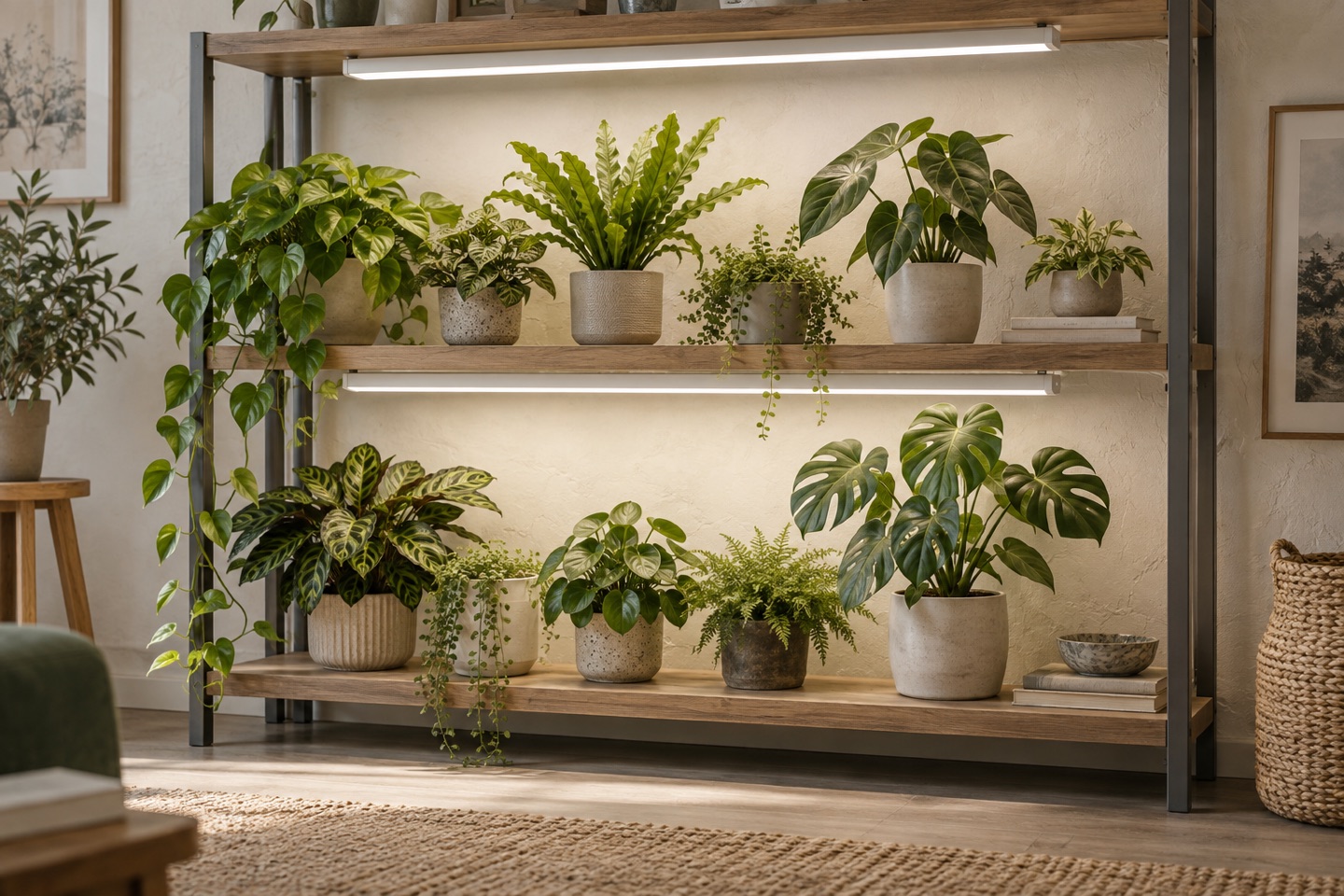
On a shelf with several pots, compare Barrina bars and sketch where each bar and connection will sit. Keep the stems toward the open front and the wiring behind their removal route. This arrangement favors a shared growing area rather than several isolated decorative corners. Decide how far you want the plants to trail before setting the vertical layout.
For a hanging basket, start with the plant and lamp supports as two separate installation decisions. Neither should hang from the other's hardware unless specifically designed for that use. Check how you will take the basket down for care and where the light will sit as the trails lengthen. If the only mounting position puts the lamp inside the foliage, change the layout first. The attractive trailing shape is a reason to preserve space around the plant.
Our recommendation
For a small Tradescantia display, we favor a movable clamp when it reaches a useful position without crowding the foliage. For a row on a suitable shelf, modular bars offer a more flexible layout. Neither choice needs to be complicated once you measure the actual trailing shape.
Choose the plant location first, then check fixture clearance, wiring, and access. Keep the care reference with the lighting plan, and review the setup as the plant extends beyond its starting outline. A little space for adjustment makes the purchase more useful than choosing a lamp solely by the size of today's pot.
When you are ready to compare listings, consider SANSI 10W adjustable clip-on (paid link) for an adjustable compact display; Barrina T5 1FT white-cover four-pack (paid link) for a modular compact shelf. Check the selected version and included components before ordering.
Research sources and scope
Plant guidance comes from the references below. Fixture links accompany the relevant recommendations. Arrangement examples and purchasing advice are our analysis. We report no hands-on product trials or independently measured growing footprints.
- Tradescantia zebrina — NC State Extension ↗Reviewed 2026-09-27
- Iowa State Extension: supplemental indoor light and measurement concepts ↗Reviewed 2026-09-27
- Independent review: SANSI multi-head clip-on; model differs ↗Reviewed 2026-09-27
- Independent Barrina review; longer version, not an exact one-foot test ↗Reviewed 2026-09-27