Spider Farmer SF600 review: a dedicated light for a growing station
The Spider Farmer SF600 is a good fit for a deliberately organized growing area: a long shelf, a seed-starting station or a grouped collection beneath one suspended fixture. We recommend its format when you have room to hang and adjust a larger light, and you want the growing station to function as one coherent workspace rather than a collection of individual desk lamps.
This review covers the SF600 linked under ASIN B08NWXLD71. Product revisions matter: the listing checked for this site described a 72W version, while older SF600 material discusses different input figures. We use those older reviews for context without presenting their measurements as results for the current unit. Our assessment is researched buying analysis, not a hands-on test or a promise about a particular harvest.
As an Amazon Associate I earn from qualifying purchases. Amazon links below are paid links. Read our disclosure.
View the Spider Farmer SF600 on Amazon (paid link)
The situations where one longer fixture helps
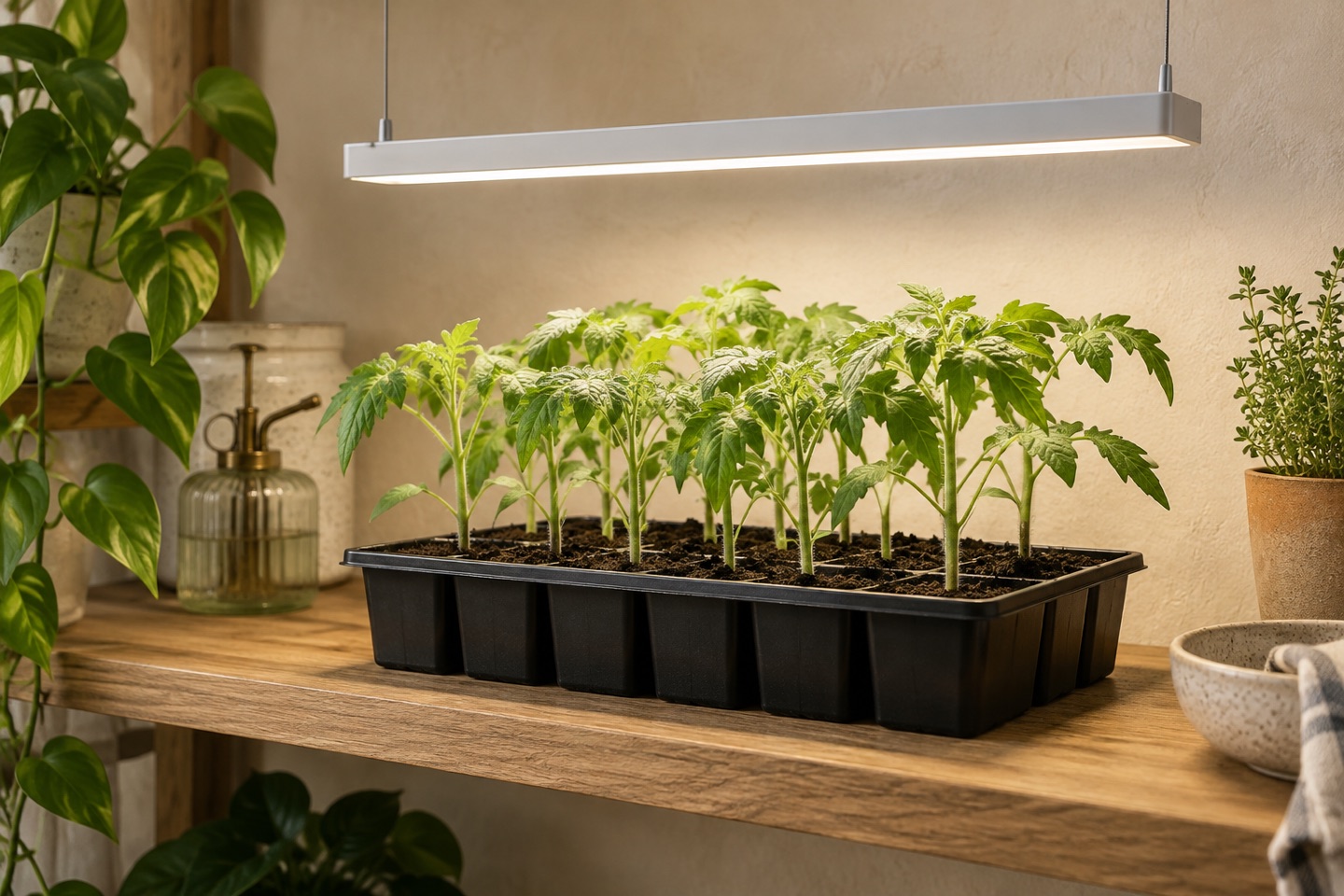
A seasonal seed-starting bench is the clearest example. Trays come and go, seedlings change height and you need to reach the whole growing area repeatedly. One suspended fixture gives the station a defined overhead arrangement. The advantage is organizational: you can plan the light, support and tray positions together instead of improvising a separate lamp over each container.
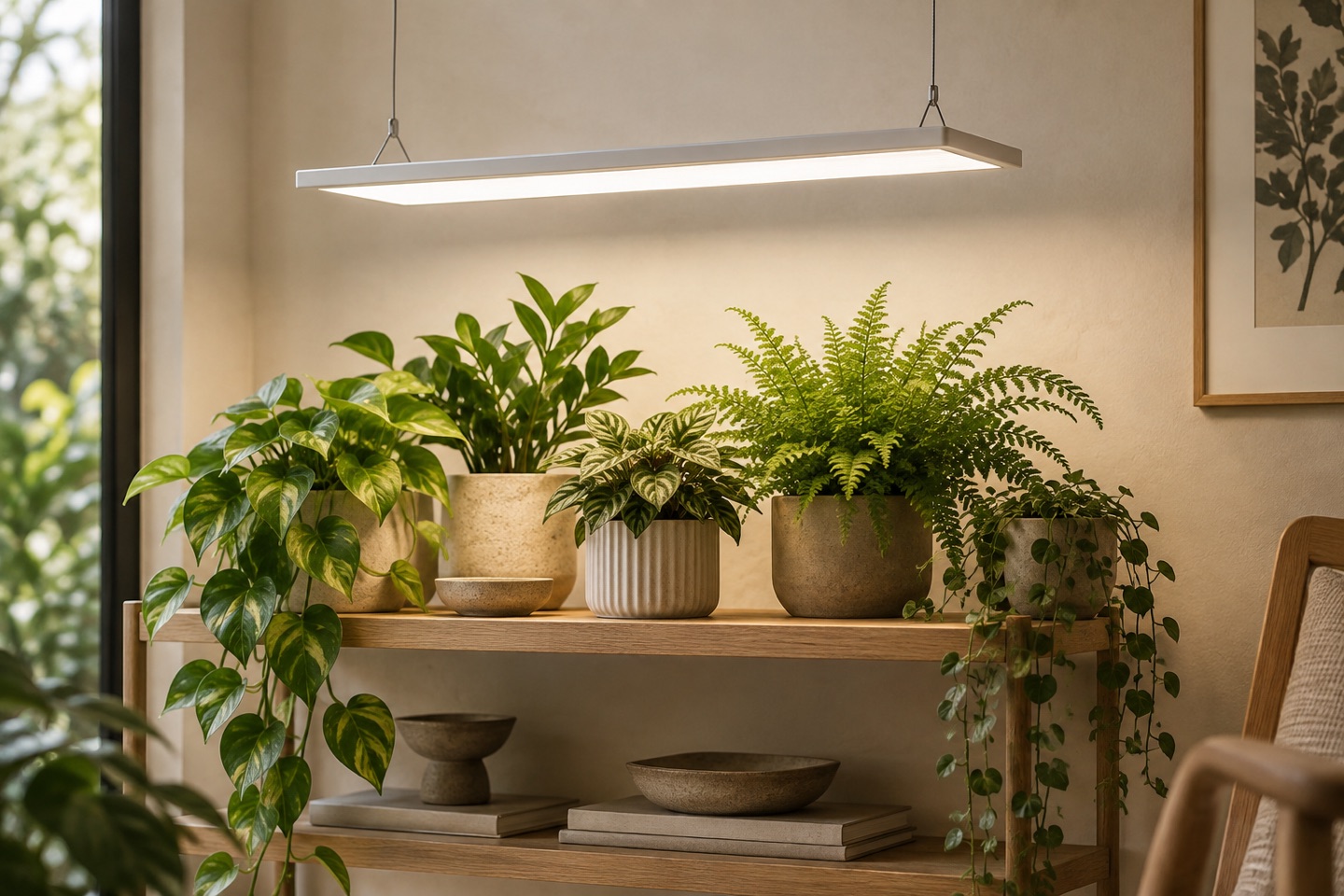
A second useful scenario is a dedicated shelf of small foliage plants. If the plants can be grouped at reasonably similar heights, a single light is easier to position over that group than several holders attached around the furniture. Leave space for the collection to change, including room to remove a plant for inspection without catching its leaves against the fixture.
A third scenario is replacing a cumbersome existing growing setup. If your current arrangement has several mismatched lamps and cables, the SF600 format may simplify the workspace. Compare the whole proposed installation before assuming it will save energy or improve results. A cleaner layout is a benefit you can evaluate separately from any unverified performance comparison.
This would not be our first choice for one plant beside a sofa. A long suspended fixture asks more of the room than a small lamp or pendant. It is also a poor answer when the available shelf is too shallow or low for the current product's mounting requirements. A growing-station design works best when the space is genuinely dedicated to that purpose.
Measure the full installation, including access
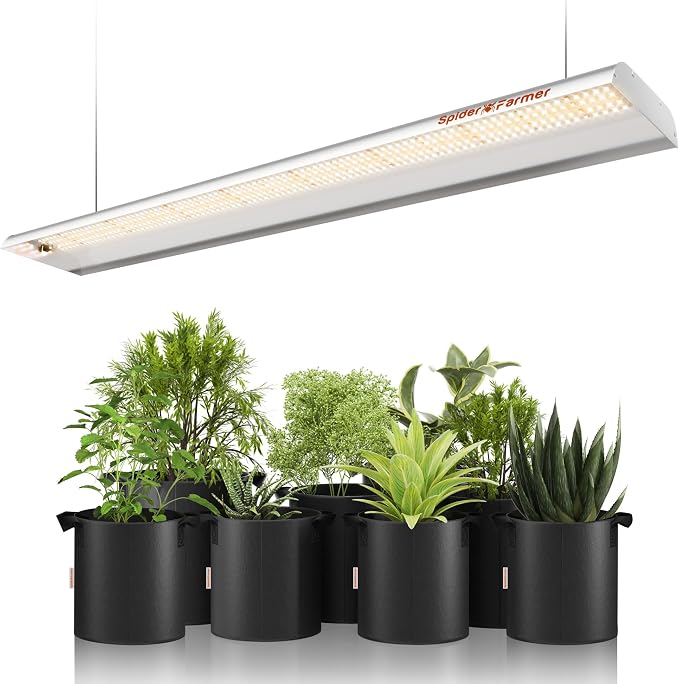
Begin with the current product dimensions in the manufacturer listing and the selected retailer version. Compare the fixture body with the usable interior of the shelf or stand. The surrounding furniture may be wider than the clear space between supports, and connectors or hanging hardware may need additional room beyond the body itself.
Then plan the vertical arrangement. Include the pot or tray, mature seedling height, intended clearance, fixture and suspension components. You need room to adjust the setup as the contents change. If the light will begin close to the highest available mounting point, work out what happens when the plants grow; do not leave that question until the shelf is full.
Access can be as important as physical fit. A tray that just squeezes beneath a fixture may be difficult to lift without tilting or catching the leaves. Rehearse the removal path with an empty tray and the intended supports. For a shelf against a wall, decide whether you can reach the rear plants from the front or need side access.
Use the shelf-fit planner as a dimensional worksheet, then apply the exact product instructions. The calculator can show how much space remains after you enter the components. It cannot approve a mounting surface, establish a growing distance or compensate for an unsupported suspension method.
Read the older tests without mixing product generations
The SF600 has more useful historical testing than many anonymous grow lights, but it also illustrates why model names are not enough. AlboPepper's SF300/SF600 review documents an earlier fixture and discusses output distribution, mounting height and missing controls. It includes affiliate links. Its measurements belong to that tested unit and arrangement.
The Seeds and Grain review also concerns an earlier version and discloses a supplied product and affiliate relationship. We do not combine those reviews into a current-version score. Their practical contribution is showing which questions deserve attention: usable space beneath the fixture, how output varies across an area, and whether the installation has sufficient adjustment.
For your own comparison, ask for a light map that matches the current revision, stated mounting height and growing footprint. A centre value is not the same thing as an average across a tray. A map also becomes less relevant if your plant positions extend beyond its tested area or if your installation differs materially from the published setup.
Do not let a single wattage number carry the whole decision. The selected listing's input figure can support a running-cost estimate, but it cannot establish how evenly your seedlings will be lit. We recommend the SF600's general layout for a dedicated station; the final fixture height and plant arrangement still need to follow current documentation and the plants' requirements.
Set up a station that is easy to work around
Choose the support and attachment arrangement before filling the shelf. Follow the current fixture instructions and the stand's load and attachment requirements. Keep the adjustment mechanism accessible after installation. A hanging light that can only be reached by removing every tray will be harder to manage as the contents grow.
Group containers by the height of their foliage, not merely by the diameter of their pots. Two plants sitting on the same shelf can have very different distances from the light. Where appropriate, a stable, suitable riser can bring a shorter pot closer to the group's level, but avoid unstable stacks or an arrangement that interferes with watering access.
Plan how the station will operate when you are not standing beside it. Put the timer or control where you can check the schedule, route cords out of the tray-removal path and keep watering activity separate from electrical connections. Verify the selected version's controls instead of assuming that a dimmer or linking feature described for another Spider Farmer fixture is included.
For a seasonal seedling setup, record when each tray enters the station and its position. Move or adjust containers deliberately rather than repeatedly rearranging everything at once. This is useful housekeeping even without a meter: it helps you connect an observed change with the layout you actually used, rather than attributing every difference to the light itself.
Check the current SF600 version on Amazon (paid link)
Budget for the station and compare alternatives
At an assumed 72W input, a hypothetical 12-hour daily schedule over 30 days uses 25.92 kWh. At $0.15 per kWh, the energy estimate is about $3.89 per month. Use the actual unit's rated or measured input when available; the example does not resolve the differences between current and older revisions. Your plant schedule and tariff may also differ.
Separate energy cost from payback claims. To calculate savings against an old light, you need its actual consumption, the same operating hours and a comparable useful growing arrangement. Replacing one ineffective lamp with a more capable station may improve usefulness without reducing the bill. Those are different outcomes and should not be compressed into a promise of automatic savings.
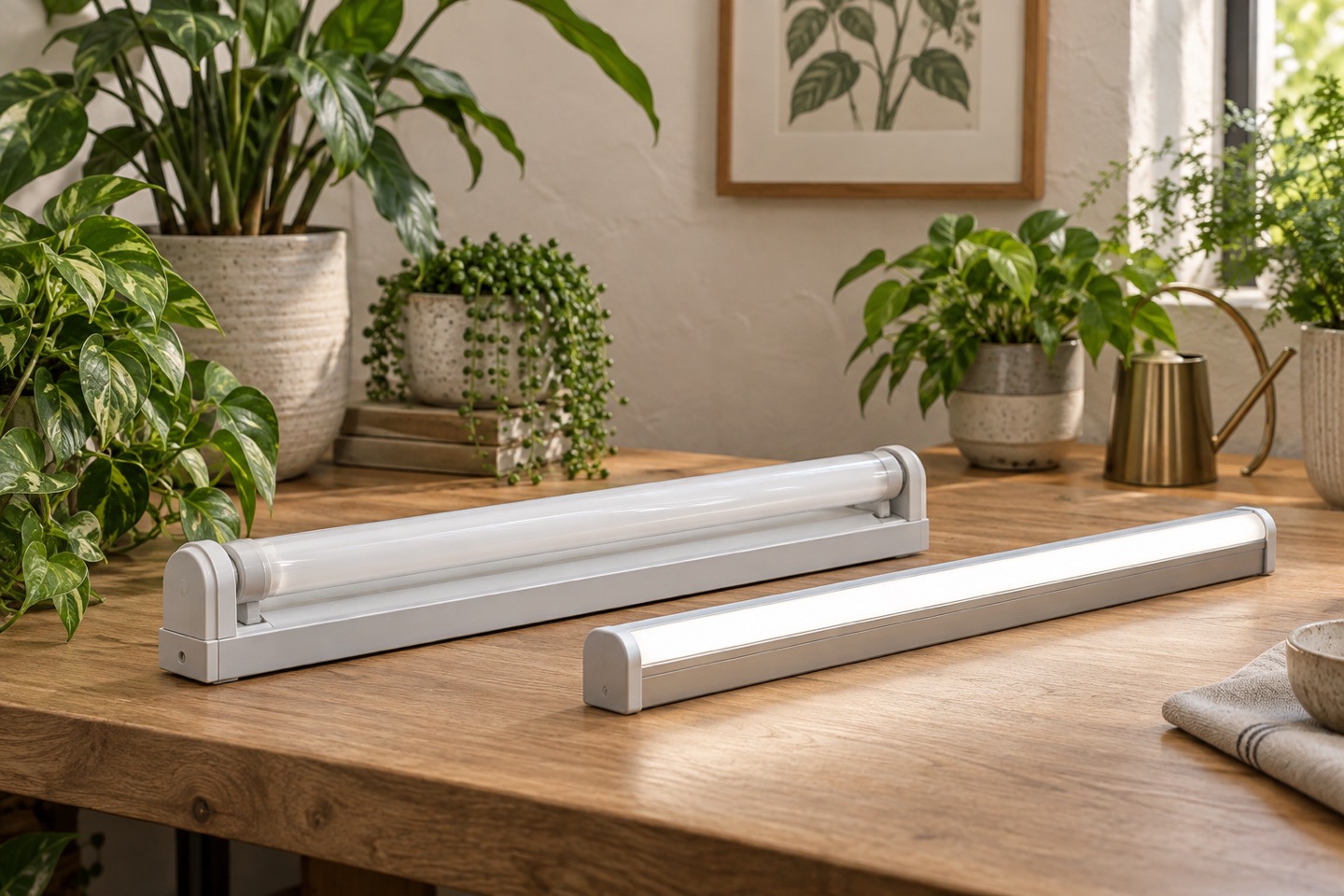
The Barrina T5 one-foot four-pack is the main alternative when smaller components fit the shelf better. It gives more freedom to distribute individual bars, at the cost of more attachment and connection decisions. The SF600 format is more attractive when one continuous fixture fits comfortably and the plants belong in one grouped growing area.
If appearance in a living room is the central requirement, compare a Soltech Aspect pendant instead. For one compact plant beside an existing desk, a SANSI clip-on may be sufficient as a physical solution. Buying the largest-looking fixture does not solve a mismatch between the equipment and the room.
Our verdict and final purchase checks
We recommend the SF600 for a purposeful indoor growing station with adequate mounting space and a practical way to adjust the arrangement. Its strongest appeal is organizing a grouped collection beneath one fixture. That is particularly useful when you already have a suitable stand and want to stop building the station around a collection of unrelated lamps.
Before buying, confirm the current revision, body dimensions, rated input, included hanging components and available controls. Check the proposed tray-removal route and the room left for plant growth. If a published measurement influences your choice, verify that it concerns the same version and a comparable installation rather than an older SF600 that happens to share the name.
Choose distributed bars when short sections suit the furniture better, or a small lamp when only one pot needs attention. Choose the SF600 when the space genuinely calls for a dedicated overhead growing fixture. That makes the purchase a considered part of the station rather than a hopeful upgrade based on wattage alone.
Sources and review approach
We reviewed product documentation and the sources below. Setup scenarios and cost examples are our analysis; this is a researched review, not a hands-on test. The opening fixture illustration is AI-generated; the supplied product image retains its source identity.
- Spider Farmer SF600 — manufacturer referenceReviewed 2026-09-27. Current page unavailable on recheck; prior verified record retained, old-version measurement claims excluded.
- AlboPepper — earlier SF300/SF600 measurementsReviewed 2026-09-28. Earlier fixture; commercial disclosures recorded in research audit. Not evidence of current-revision performance.
- Seeds and Grain — earlier SF600 reviewReviewed 2026-09-28. Earlier fixture; commercial disclosures recorded in research audit. Not evidence of current-revision performance.