SANSI 10W clip-on review: a focused light for one plant
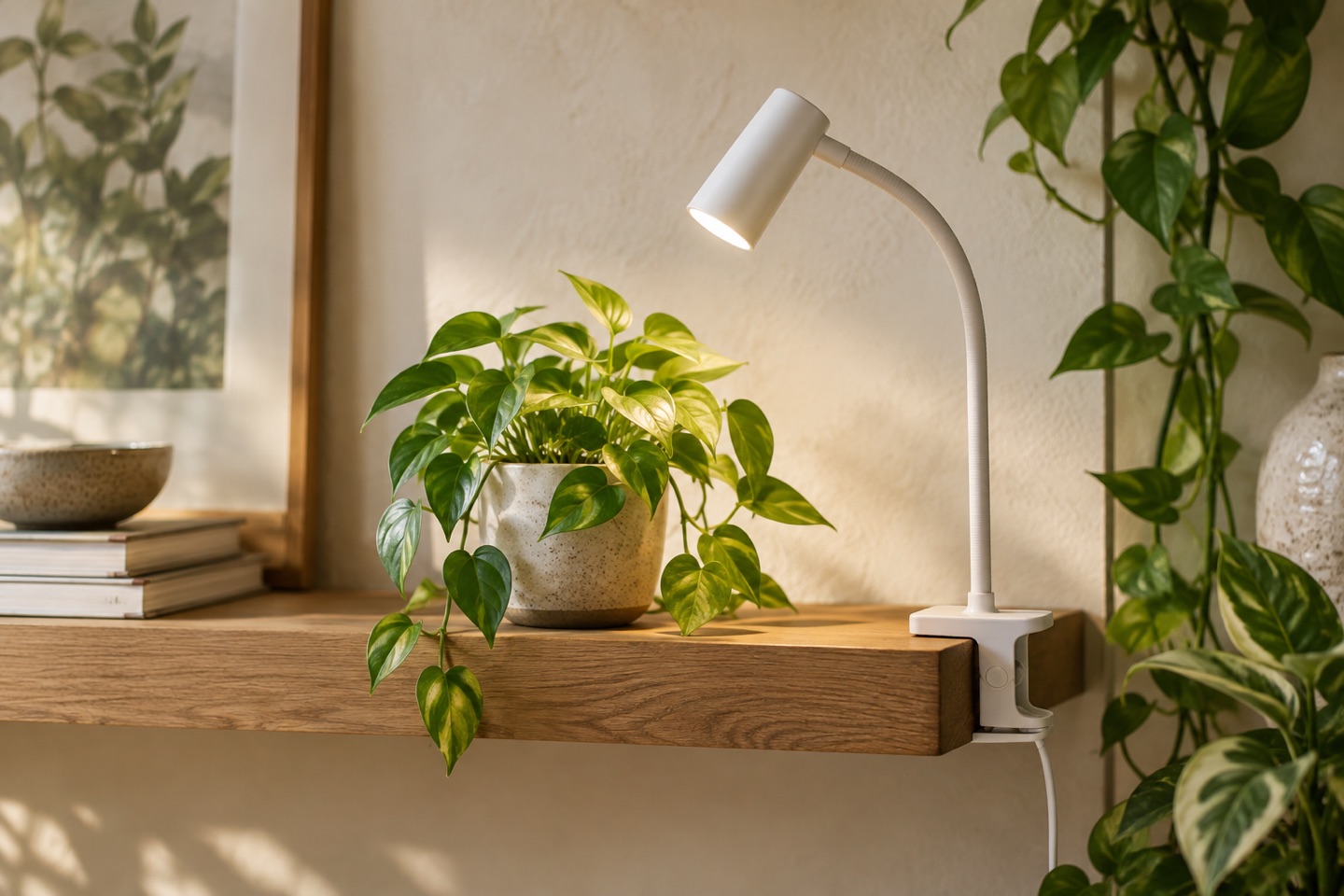
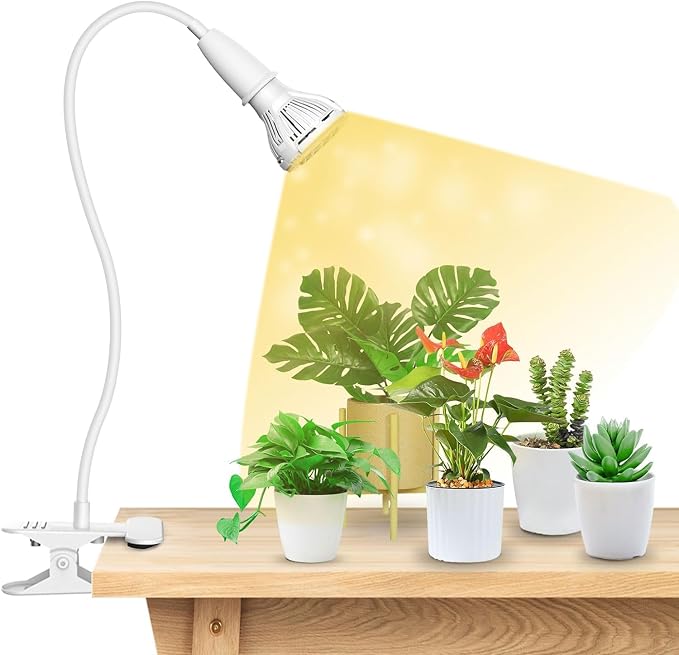
The SANSI 10W adjustable clip-on is a good choice for a single houseplant beside a desk, table or open plant stand. Its appeal is the complete arrangement: a bulb, a flexible arm and a furniture clamp, without a separate floor stand occupying the room. We recommend it when the plant already has a sensible home and needs a light that can reach over its leaves.
The purchase hinges on placement more than on the wattage printed on the box. You need a secure edge for the clamp, room for the arm and enough clearance above the foliage. This review covers the one-head model, ASIN B0CC1SV14H, rather than SANSI's pot-mounted or multi-head versions. Our assessment combines product documentation with practical setup analysis; we have not carried out a hands-on trial.
As an Amazon Associate I earn from qualifying purchases. Amazon links below are paid links. Read our disclosure.
View the SANSI 10W one-head light on Amazon (paid link)
Where the one-head design makes sense
Imagine a pothos on the far end of a work desk. A floor lamp would take space beside your chair, while a hanging fixture would mean planning a ceiling attachment. A clip-on lamp can put the light near that one plant using furniture already in the room. That is the strongest reason to choose this SANSI: it solves a small placement problem with relatively few separate components.
A second suitable arrangement is an open plant stand with a firm shelf edge. The pot occupies the surface and the lamp attaches beside it, leaving the rest of the shelf available. Positioning becomes easier when the plant is compact enough that you can aim at the whole crown rather than choosing between several widely separated branches.
A third possibility is a temporary winter station near a window. You may want supplemental light for a plant that spends brighter months elsewhere, without dedicating an entire shelf to growing equipment. Before choosing a clamp lamp for that job, check that moving the pot will not leave the cable stretched across the room or require you to bend the arm into an awkward position.
We would choose a different format for a long seed tray or a row of pots. One adjustable head gives you a focused placement, not independent control over several growing positions. A shelf bar is a more natural shape for a line of small plants, while separate lamps are easier to place around plants living on different pieces of furniture.
Check the clamp, reach and growing clearance
Start by measuring the proposed furniture edge. Check its thickness, shape and underside: a rounded lip or decorative apron may prevent a clamp from sitting squarely even when the top looks suitable. Compare those measurements with the selected fixture's current clamp specification. We have not established an exact clamp-opening measurement for this version, so avoid planning around a number copied from another SANSI lamp.
Next, map the route from the attachment point to the middle of the plant. A clamp beside the pot needs more horizontal reach than one behind it. Use a ruler or a piece of string to visualize that route, including the space needed to point the bulb downward. This is a layout rehearsal, not a substitute for the manufacturer's arm dimensions or mounting instructions.
The SANSI instructions specify at least one foot between the light and plants and warn that the operating bulb can cause burns. That makes a shallow enclosed shelf a poor starting point. Measure from the tallest leaves, not the pot rim, and allow the plant to grow into the space you are reserving.
For example, a shelf opening can look generous until the pot, saucer and plant consume most of its height. Write down each component before buying. If the required clearance is impossible, choose another location or a fixture specifically documented for that arrangement. Bending the arm harder cannot create missing vertical room.
Why the adjustable arrangement is useful
The flexible head lets you decide where the lamp aims instead of placing the plant directly beneath an existing room light. That is useful beside a window, where you may want the pot in a particular position for access and appearance. Set up the lamp with the plant in its normal watering tray, rather than arranging everything around an empty pot and discovering that the finished setup no longer fits.
Having one head also keeps the daily decision simple. There is one plant position to inspect and one beam direction to maintain. If you are new to supplemental lighting, a small station can be easier to understand than a rack containing several species at different heights. Keep the first arrangement consistent enough to notice whether leaves eventually grow outside the lit area.
The product's appeal should not depend on interpreting equivalent-wattage advertising. The selected model is described as a 10W lamp; that is the input figure relevant to a simple electricity estimate. It does not tell you how much useful light reaches an outer leaf. Room brightness and a bright patch on the table are not measurements of plant-level illumination.
Think of the arm as a way to position the fixture, not as a guarantee of unlimited stability. Arrange the cable so it does not pull the head sideways, and check the attachment after moving furniture or removing a pot. If the intended location requires frequent repositioning around books, a monitor or curtains, another mounting style may be less troublesome.
Check the one-head SANSI model on Amazon (paid link)
Build a routine that works with your room
Choose a lighting schedule around both the plant and the people using the room. A desk beside your bed is a different proposition from a spare-room plant stand: even a compact lamp becomes inconvenient if it stays on while you want darkness. The selected Amazon version was verified as the no-timer one-head model. Budget for a compatible timer if scheduled operation is part of your plan.
Keep the controls reachable after installation. A socket hidden behind a heavy desk may make an otherwise tidy setup annoying to use. Plan where you will switch the light, where the cord will run and where the pot goes during watering. Avoid an arrangement in which removing the plant requires tugging the lamp out of alignment.
For a transparent running-cost example, suppose the lamp draws 10W and runs for 12 hours daily over 30 days. That is 0.010 × 12 × 30 = 3.6 kWh. At an illustrative electricity rate of $0.15 per kWh, the monthly energy cost is $0.54. Your actual tariff and measured input determine your cost; neither the schedule nor the result is a recommended light dose for every plant.
Once the arrangement is working, keep a simple note of its position and schedule. If you change the height, move the plant or extend the operating hours, record that adjustment. This gives you a more useful history than changing several things at once and trying to remember which alteration affected the plant or your comfort at the desk.
The tradeoffs and better alternatives
The main compromise is coverage. A single head is convenient for one location, but that convenience declines when your collection spreads across the shelf. You may find yourself aiming at one plant while another sits outside the useful area. If the actual goal is a group of small pots in a row, read our Barrina T5 review before accumulating several clip lamps.
The fixture also needs suitable furniture. A thin decorative shelf, an unstable stand or a location without an accessible edge changes the buying decision. A compatible freestanding lamp with a SANSI BR30 bulb offers another mounting approach, but it requires its own fit checks. A stronger bulb is not automatically a better answer to a missing clamp point.
For a plant that is part of a permanent living-room display, a Soltech Aspect pendant may suit the room better. It shifts the installation work overhead and introduces different cable-routing decisions. Choose between these designs by deciding where the fixture can live comfortably, then check whether its documented output suits your plant.
We do not assign the SANSI a reliability score or promise a growth rate. Reviews of multi-head SANSI models cannot establish either for this one-head version. The useful conclusion is narrower: its layout is well suited to a focused plant station when the mounting point and required clearance are already available.
Our recommendation and final buying checks
We recommend this one-head SANSI for a compact plant station where preserving table or floor space matters. Its biggest advantage is bringing an adjustable fixture to furniture you already use. For a desk plant, a small open stand or a seasonal window-side station, that can be a more practical starting point than a suspended growing system.
Before ordering, complete four checks: identify the exact one-head version, measure the attachment point, confirm the head can reach the plant with the specified clearance, and plan the power/control arrangement. If any of those checks fails, change the layout before buying accessories to rescue it. The stand-fit guide helps compare mounting approaches.
Also think one pot ahead. If you expect the station to become a shelf of seedlings next month, buying a format that suits the future layout may save rearranging everything. If the task will remain one plant in one corner, the clip-on's simplicity is a real advantage rather than a compromise to apologize for.
Sources and review approach
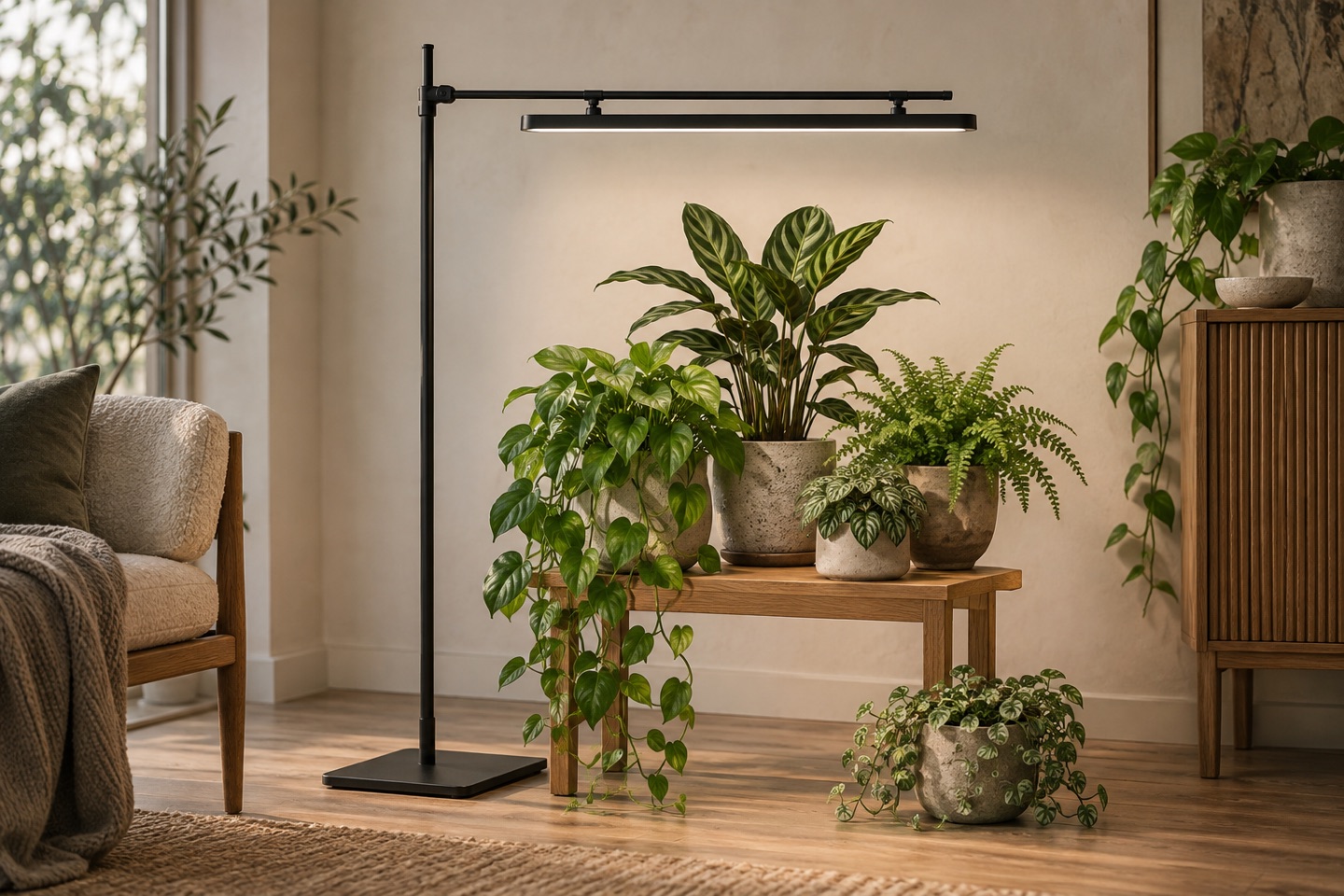
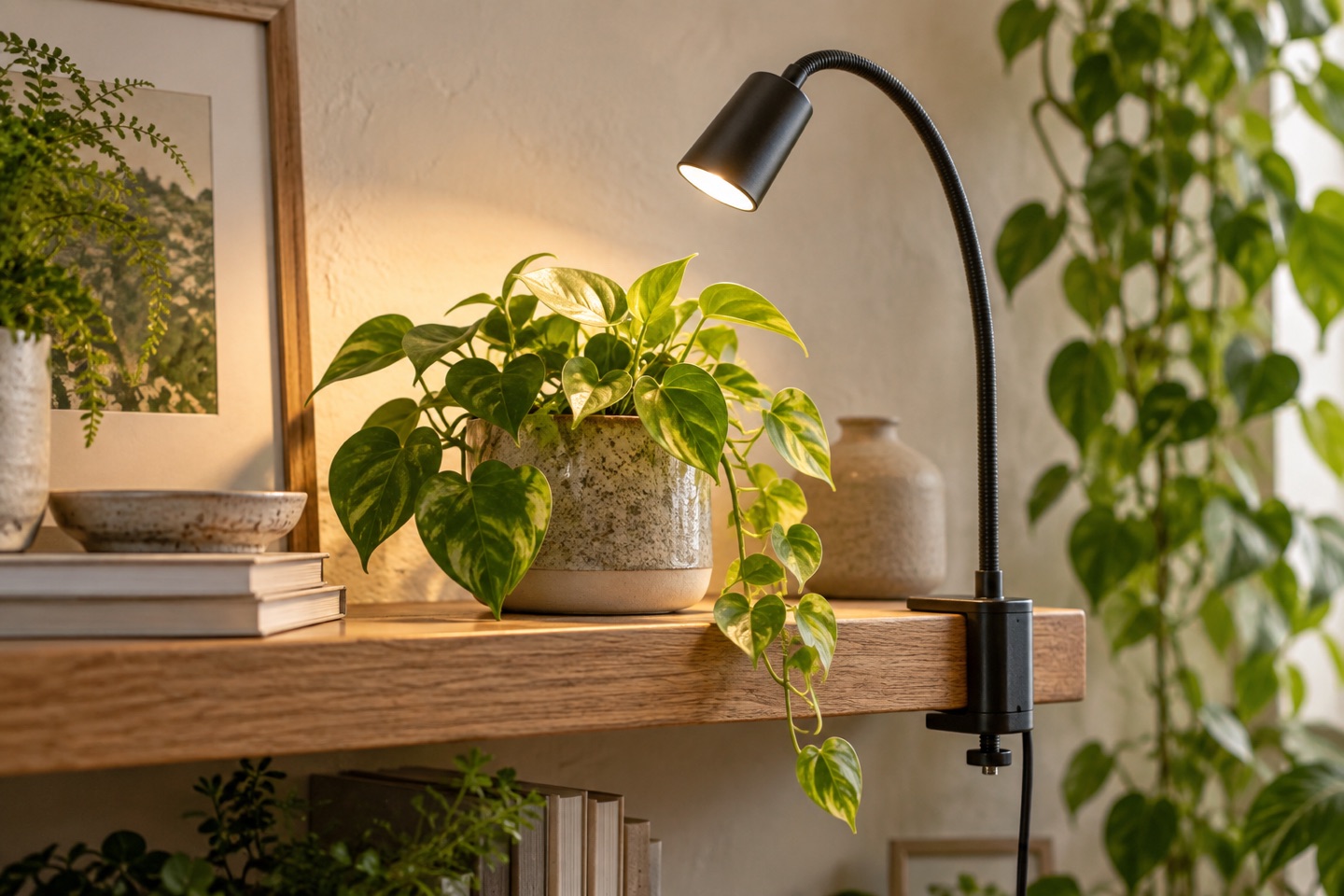
We reviewed product documentation and the sources below. Setup scenarios and cost examples are our analysis; this is a researched review, not a hands-on test. The opening fixture illustration is AI-generated; the supplied product image retains its source identity.
- SANSI 10W adjustable clip-on — manufacturer referenceReviewed 2026-09-28. Manufacturer specifications; not our measurements.