SANSI BR30 36W review: a grow bulb for a planned lamp setup
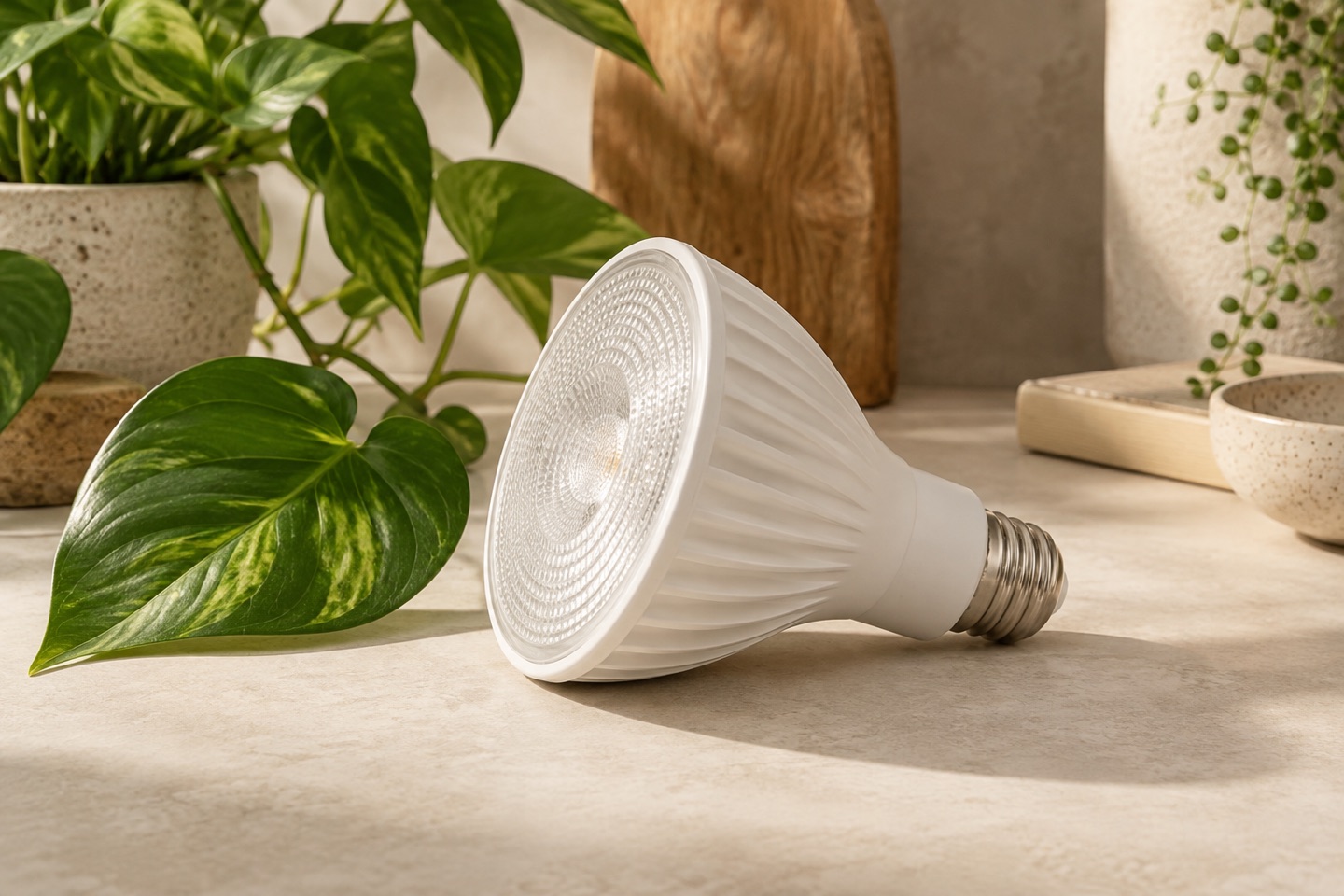
The SANSI BR30 36W makes sense when you want to choose the lamp and the grow bulb separately. We recommend this approach for a plant corner with a suitable adjustable fixture, especially when a furniture clamp or under-shelf bar would put the light in the wrong place. The bulb gives you a plant-light source; the lamp determines how successfully you can position it.
This review covers the US E26 BR30 36W selection associated with ASIN B07BRKG7X1. It does not transfer older PAR30 test results to the current bulb. Our recommendation is based on the documented product and the practical requirements of building a useful setup, not on a hands-on measurement of its growing footprint. Start with the fixture you intend to use, because that is where this purchase either becomes straightforward or gains unexpected complications.
As an Amazon Associate I earn from qualifying purchases. Amazon links below are paid links. Read our disclosure.
View the SANSI BR30 36W bulb on Amazon (paid link)
Who benefits from buying a separate bulb
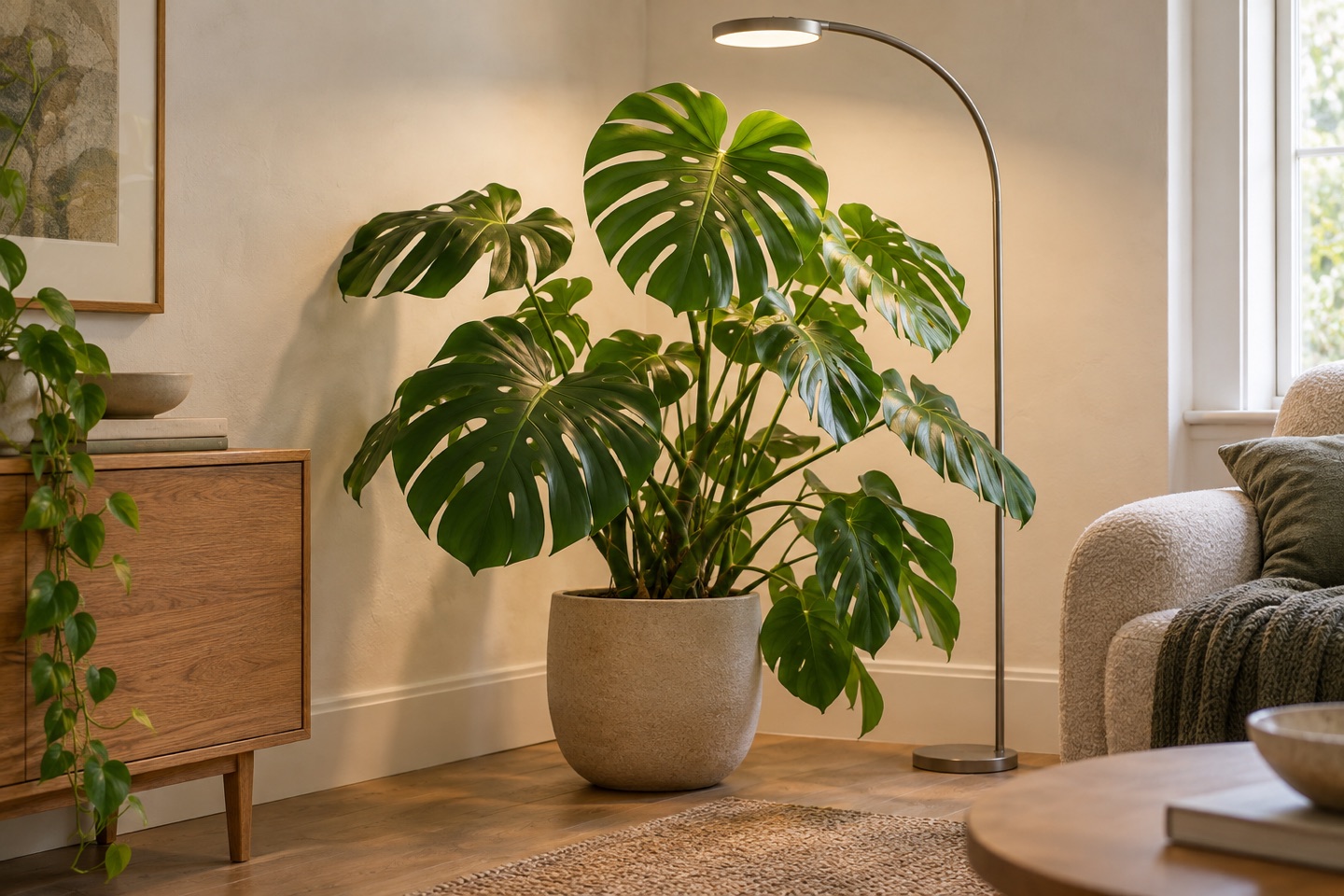
Consider a plant beside a reading chair. An adjustable floor lamp might already provide the right direction and height, while a clamp lamp would need a table you do not want in that corner. If the existing fixture is compatible, a screw-in bulb lets you build around that arrangement. The useful benefit is freedom to select a support that fits your room.
The same logic applies to an open plant stand with a separate overhead lamp. You can choose the base location independently of the pot, making it easier to remove the plant for watering. Plan the light and plant as a pair: a beautifully positioned lamp is less useful if its beam lands beside the foliage when the shade is angled normally.
A third scenario is a growing plant that no longer fits beneath a short desk fixture. A suitable taller lamp can create additional positioning room without tying you to a particular shelf. The relevant question is whether the whole assembly reaches the leaves at an appropriate angle, rather than whether the bulb can technically screw into the socket.
This is less attractive if you need to buy every supporting component from scratch for a long row of pots. Multiple individual bulbs introduce multiple holders, cables and placement decisions. Before committing to that arrangement, compare a linear fixture in our Spider Farmer SF600 review or distributed bars in our Barrina T5 review.
Match the bulb to the fixture, not just the socket
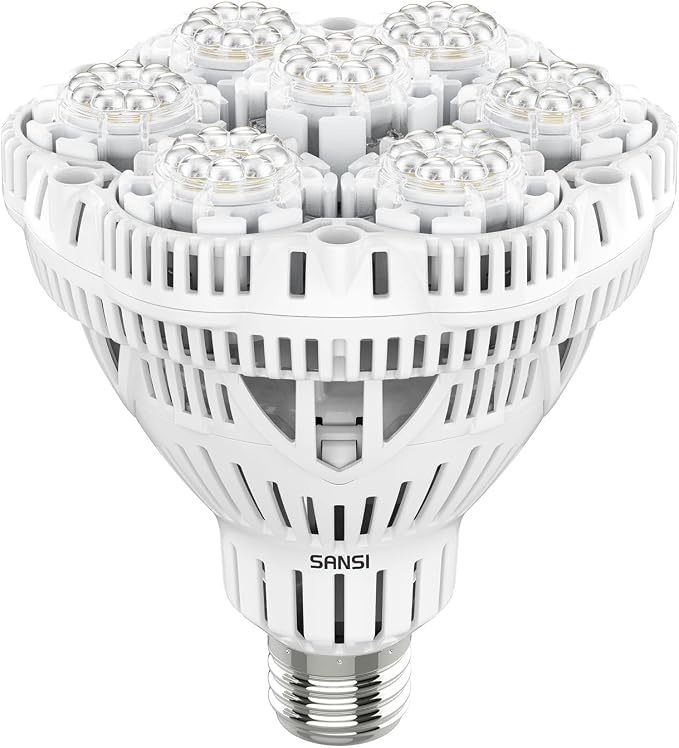
SANSI lists a US E26 option for the BR30 36W model on its product page. Matching that base is the first check, not the last. Read the proposed lamp's permitted bulb type, actual-wattage rating and physical limits, and compare them with the bulb instructions. Equivalent-wattage marketing does not replace an electrical input rating.
Look at the shade and holder next. A bulb may fit the socket but sit too deeply inside a narrow shade, project awkwardly beyond it or leave insufficient room for the intended ventilation. Measure the available opening and depth rather than judging scale from a photograph. If the fixture instructions and bulb requirements do not clearly agree, choose a documented compatible combination.
Mechanical fit matters as well. An adjustable arm must support the installed bulb in the angle you actually need. A lamp that holds a small household bulb upright may behave differently with a larger grow bulb pointed downward. Verify the holder and support specifications rather than assuming a similar-looking lamp will work because another person used it online.
Finally, check the switch and control arrangement. Do not assume a household dimmer is compatible simply because the bulb is LED. Use only controls supported by the exact bulb and fixture documentation. If you want automatic scheduling, choose a compatible timer arrangement and confirm that the lamp returns to the intended operating state after power is restored.
What the specification tells you about plant light
The manufacturer identifies this bulb as 36W with a 4000K white appearance. It also publishes plant-light output figures on the product page. Those are manufacturer specifications, rather than measurements made in your room. The white appearance can fit an ordinary home setup, but whether you like it beside your existing room lighting remains a personal choice.
For the purchase decision, distinguish total output from distribution. PPF describes the total plant-relevant photon output, while PPFD describes what reaches a surface area at a particular position. A single measurement below the centre of a bulb cannot tell you how evenly an entire broad plant is lit. That distinction is especially useful when comparing a bulb with several separated shelf bars.
Our advice is to sketch the plant from above. Mark the outer leaves and the proposed position of the bulb, then ask which areas could be shaded by the plant itself or the fixture. For a climbing plant, repeat that exercise from the side: leaves at several heights may face different directions. The point is to identify the coverage question before buying, not to turn a sketch into a light map.
If you have a suitable meter, compare positions across the foliage at the final lamp height. Keep the mounting arrangement consistent while measuring. The light-and-cost calculator can turn an entered PPFD into an illustrative daily quantity, but it cannot supply the missing measurement or choose a target for your species.
Plan the corner before installing the bulb
Build the layout around ordinary activities. Leave space to lift the pot, reach the switch and clean the area without catching the lamp cable. In a living room, check the view from the chair as well as from the plant's position. A lamp that looks tidy when you stand beside it may point directly into your line of sight when you sit down.
For a broad plant, begin by choosing the section of foliage you intend to supplement. Existing daylight may already favour one side. That makes the window, plant and lamp part of one arrangement rather than three separate decisions. Avoid a permanent installation based solely on where a conveniently placed outlet happens to be.
For an upright climbing plant, allow for the support and future leaves when planning lamp height. If the plant must be moved each time you water it, mark its normal position on the stand or use another unobtrusive reference. Returning it to a repeatable position makes later adjustments easier to interpret and reduces the temptation to keep moving the light randomly.
Set the operating schedule deliberately and assess the room while the lamp is on. Change one placement variable at a time. If the proposed bulb needs a holder, timer and new stand before it is usable, include all of those components in the comparison with a complete fixture. The advertised bulb price is not the total cost of the station.
Check the selected SANSI 36W BR30 on Amazon (paid link)
Running cost and the meaningful alternatives
Using the stated 36W input as an estimate, 12 hours a day for 30 days uses 0.036 × 12 × 30 = 12.96 kWh. At an illustrative $0.15 per kWh, that is about $1.94 for the month. This is arithmetic for a hypothetical schedule, not measured consumption or a universal growing recommendation. Substitute your tariff and measured input when available.
Compare the complete arrangements rather than wattage alone. The SANSI 10W clip-on includes a support and suits a smaller, focused station. Choosing it can reduce the number of components you need to source, provided the furniture attachment works. Buying a separate BR30 is more appealing when you already have an appropriate fixture or need a different support style.
The GE Seeds and Greens four-pack offers another way to equip several separate lamp positions. Four bulbs are useful only if you have places to put them; their combined count does not make one installation simpler. Our GE review explains the per-bulb specification and the distinction between a multi-position plan and a single larger lamp.
For a prominent pendant installation, compare the Soltech Aspect Gen 2. Its housing and controls are part of a complete designed fixture. The SANSI approach instead puts more of the installation choice in your hands. Neither format wins automatically: one prioritizes component flexibility, the other an integrated hanging arrangement.
Our verdict and the last checks before buying
We recommend the SANSI BR30 36W for a deliberately planned bulb-and-holder setup, particularly when an adjustable lamp is already the right physical solution for your plant. The main advantage is the ability to select the support separately. That gives you useful flexibility around furniture, but it also makes fixture compatibility part of your responsibility as the buyer.
Complete the order only after matching the selected US base, current bulb generation, holder rating, physical envelope and intended controls. Then check where the assembled lamp will point from a seated position and how you will reach the pot. These details determine whether the setup remains pleasant to use long after the initial purchase.
Choose a complete clip-on fixture if you want fewer components and have a sound mounting point. Choose bars if the plants form a row beneath a shelf. Choose this BR30 when the room calls for an independently chosen lamp and you are willing to plan that combination properly. That is a useful reason to buy it without relying on exaggerated coverage promises.
Sources and review approach
We reviewed product documentation and the sources below. Setup scenarios and cost examples are our analysis; this is a researched review, not a hands-on test. The opening fixture illustration is AI-generated; the supplied product image retains its source identity.
- SANSI BR30 36W grow bulb — manufacturer referenceReviewed 2026-09-28. Manufacturer specifications; not our measurements.