GE BR30 Seeds and Greens review: four bulbs for separate plant stations
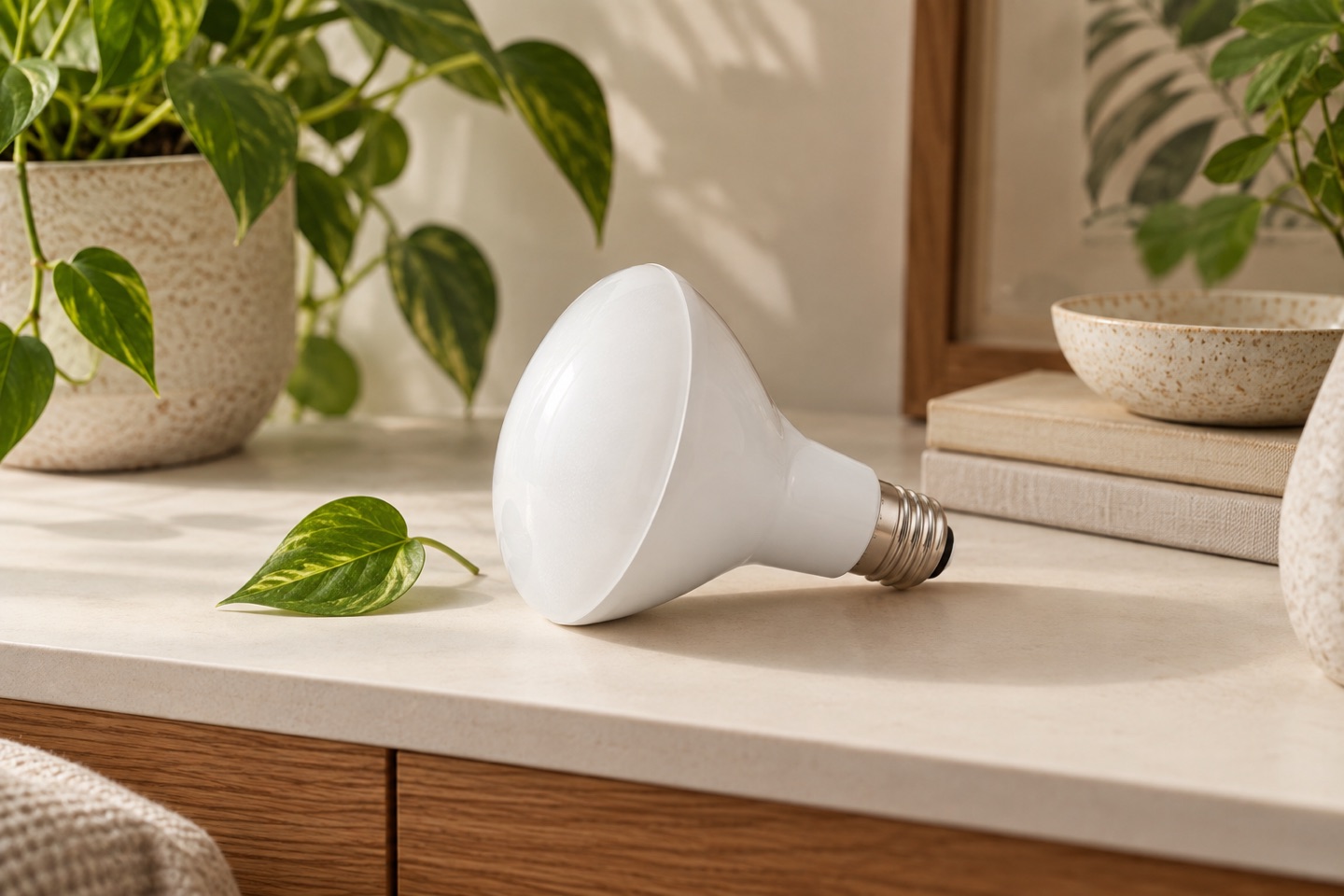
The GE BR30 Seeds and Greens four-pack is a good choice when you have several suitable lamp positions to equip, or you want replacement bulbs for a planned indoor growing arrangement. We recommend it for buyers who understand where each bulb will go. Four bulbs offer flexibility across separate locations, but the pack does not include the holders or positioning hardware that turn those bulbs into a usable setup.
This review covers ASIN B07Z11RYBK, the BR30 E26 Seeds and Greens four-pack. It should not be confused with another GE shape or the Flowers and Fruit version. Our assessment combines the manufacturer's per-bulb information, the verified package identity and practical installation analysis. We have not measured these bulbs or conducted a growth trial, and our recommendation does not depend on a claimed harvest or customer-rating average.
As an Amazon Associate I earn from qualifying purchases. Amazon links below are paid links. Read our disclosure.
View the GE BR30 Seeds and Greens four-pack on Amazon (paid link)
When a four-pack is a useful purchase
The strongest scenario is several plants living in separate places. One may sit on a desk, another beside a window and a third on a stand across the room. If each location has a compatible fixture, buying bulbs for those positions can be more practical than trying to bring the plants together beneath one growing light. Each station still needs its own placement and scheduling plan.
A second scenario is a small indoor display built around more than one suitable holder. Separate sources can be aimed at different parts of the arrangement, provided their positioning and light delivery are assessed. This is different from screwing one bulb into a ceiling socket and expecting the entire room to become a growing space.
A third scenario is a seasonal seed-starting project with an existing fixture arrangement that uses replaceable bulbs. The purchase can make sense when you already know how many positions you need. Measure the actual tray area and planned source locations first; a four-pack is a quantity of components, not a complete seedling station with a verified footprint.
If you only need one plant lamp and own no holder, compare complete fixtures before buying the pack. Unused bulbs in a cupboard do not make the installed light better value. A SANSI clip-on may be a more direct physical solution for one desk plant, while bars can suit a continuous shelf more naturally than several separate holders.
Understand the bulb specification and package identity
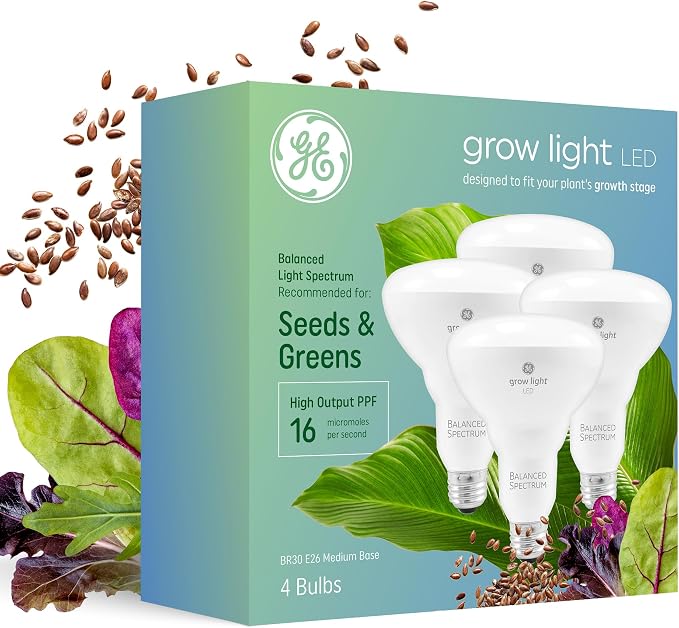
GE's Seeds and Greens BR30 specification page describes a 9W, 120V indoor bulb and identifies it as non-dimmable. The manufacturer page is for one bulb; the linked Amazon selection contains four. Keep those two levels separate when comparing specifications, package contents and estimated energy use.
The packaging identifies 16 micromoles per second of photosynthetic photon flux, or PPF. This is a per-bulb output description, not a light reading at a leaf. It cannot tell you how far away to position the bulb or how wide a tray it will illuminate adequately. Those questions depend on the installed arrangement and the plant's needs.
The Seeds and Greens wording helps identify the product within GE's range. It does not mean the bulb can be placed anywhere above any seedling and deliver the desired result. Nor should you substitute specifications from a different shape simply because its package uses the same growing-language theme. Match the BR30 format and exact selection before using a figure in your planning.
For a useful pre-order check, write down the pack count, base, voltage, actual input and dimming status in one place. Compare those entries with the proposed fixtures. That small record is more useful than collecting broad claims about full-spectrum light while leaving the essential installation questions unanswered.
Fit each bulb to a suitable lamp
An E26 socket is the starting point for compatibility. Check the complete fixture instructions for supported bulb types, electrical limits and physical room. A screw base that matches does not establish that the bulb fits beneath the shade or that the holder is appropriate for the intended direction. Do not modify a fixture to rescue an incompatible combination.
Because GE identifies this bulb as non-dimmable, plan around compatible switching and scheduling rather than a household dimmer. If your existing lamp has built-in dimming controls, confirm the documented compatibility or choose another holder. Keeping the installation straightforward is one of the best ways to preserve the appeal of a replaceable-bulb setup.
Then look at where the light will point. A conventional table lamp intended to illuminate a room may not aim naturally at the plant beside it. The shade can also change the distribution. Rehearse the fixture's position with the plant in place and think about whether the foliage, rather than the wall or tabletop, is in the intended direction.
For multiple stations, evaluate them individually. One holder may work above a compact plant while another sits much farther from a broad crown. Identical bulbs do not create identical growing conditions in those two positions. The practical benefit of the four-pack is being able to equip several suitable fixtures, not having to force every plant into the same layout.
Check the GE BR30 four-pack selection on Amazon (paid link)
Plan distribution before choosing an operating schedule
Start by drawing where the plants and holders will sit. For separate houseplants, note the approximate leaf positions relative to each source. For a tray, mark the outer rows as well as the centre. This helps identify where a layout may favour one part of the growing area and where a different fixture format deserves consideration.
Do not add the four bulbs' output labels together and interpret the result as a reading at every plant. Even when several sources are used in one area, distribution depends on their positions and surroundings. If you have a suitable meter, measure representative points at plant height after installation. Without measurements, keep your coverage conclusion cautious rather than presenting an invented footprint.
Choose the operating period in the context of the plant and its existing daylight. Our seedling lighting guide helps organize that question for a seed-starting project. A timer may make a consistent routine easier, but longer operation does not answer every problem caused by a poorly aimed bulb or an overly spread-out arrangement.
For a living-space setup, check the proposed schedule against the household routine too. A plant station beside a bed or screen may need a different location if the light becomes intrusive. Moving the station to a more practical position can be a better solution than repeatedly switching it off at unpredictable times because the installation is uncomfortable to live with.
Running cost, value and sensible alternatives
Using GE's stated 9W per bulb, one bulb operating for 12 hours daily over 30 days uses 3.24 kWh. At an illustrative $0.15 per kWh, that is about $0.49 per month. Four bulbs on the same schedule use 12.96 kWh, or about $1.94. These are transparent estimates, not measured bills or a recommended schedule for every plant.
That comparison also shows why pack count deserves attention. You pay operating costs for the bulbs you actually run, not for unopened spares. A four-pack can be useful if you have a clear plan for several holders, but it is not automatically the least expensive route to one finished station once fixture purchases are included.
A SANSI BR30 36W is an alternative for a separately chosen lamp when a different bulb specification suits the project. Its input figure alone does not establish superior results at your plant. Compare the relevant documented distribution and the complete holder arrangement instead of treating one higher-wattage bulb as interchangeable with four distributed sources.
For a shelf, the Barrina one-foot bars may fit more neatly than several bulb holders. For one longer dedicated station, the Spider Farmer SF600 offers a different overhead format. The GE pack is most appealing when replaceable bulbs in separate compatible fixtures are already the plan, rather than a workaround for a shelf that wants a linear light.
Our recommendation and final buying checks
We recommend the GE Seeds and Greens four-pack for planned multi-position setups and buyers who already have suitable holders. The principal advantage is straightforward component flexibility: you can use the bulbs in appropriate separate locations and replace an individual bulb without treating the whole installation as one fixture. The exact replacement must still match each holder's requirements.
Before ordering, confirm the BR30 E26 Seeds and Greens four-pack rather than a different GE shape or spectrum-labelled version. Check each fixture's compatibility, account for the non-dimmable specification and decide where the sources will point. Include holders and timers in the total if you do not already own suitable ones.
For a first plant-light purchase, sketch one complete station before buying four of anything. If that station works cleanly with this bulb format, the remaining bulbs can support other planned locations. If it requires awkward shades, unsupported holders or inconvenient cables, a complete clip lamp or shelf bar may be the more useful purchase.
The pack is a sound format for the right arrangement, but its value comes from how you will use the individual bulbs. Choose it because those positions are ready to benefit from separate sources, not because a box of four sounds like a finished growing system.
View the GE Seeds and Greens BR30 four-pack on Amazon (paid link)
Sources and review approach
We reviewed product documentation and the sources below. Setup scenarios and cost examples are our analysis; this is a researched review, not a hands-on test. The opening fixture illustration is AI-generated; the supplied product image retains its source identity.
- GE BR30 Seeds and Greens — per-bulb manufacturer referenceReviewed 2026-09-28. Single-bulb manufacturer specifications; retailer four-pack identity checked separately. Not our measurements.